Local Knowledge
What Makes Brooksville Trees Different
Brooksville is the Hernando County seat and the hilliest ground we work in Tampa Bay, with genuine old-growth hardwood and longleaf pine stands still standing in Southern Hills and on the rural acreage that surrounds town. The historic downtown carries a real, mature canopy shading century-old buildings, while the county's rural fringe holds large properties where storm damage can sit unnoticed for a season simply because nobody walks the back acreage regularly. Brooksville's tree work runs from delicate historic-canopy pruning downtown to full acreage clearing a few miles out.
Trees We Work On Most in Brooksville
- Old-growth longleaf pine
- Brooksville's rural hill country still holds genuine old longleaf stands, some predating most of the development around them. Longleaf is more wind-firm than slash pine when healthy, but a dead or lightning-struck old longleaf carries enormous weight and needs experienced rigging, not a straightforward felling cut.
- Live oak (historic downtown)
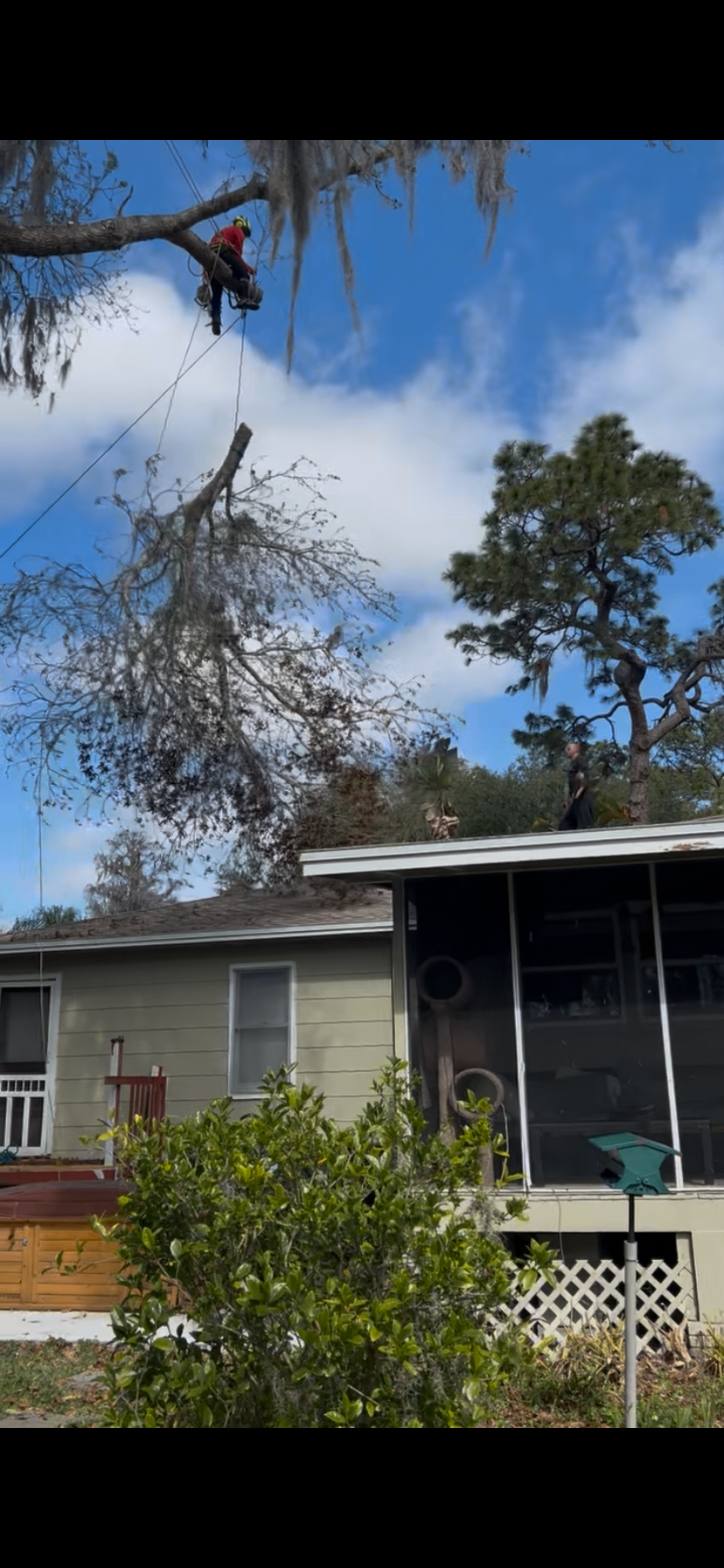
- Brooksville's historic district and older residential streets hold mature live oaks that genuinely predate the buildings and roads around them. Hillier terrain here gives many of these oaks better drainage and anchoring than flat sandy-soil oaks elsewhere in our territory, so we focus more on end-weight management over historic rooflines than on uprooting risk.
- Hickory
- Present through Brooksville's older residential and rural hill properties, less common elsewhere in our Tampa Bay territory. Hickory is dense and strong-wooded when healthy but drops large limbs after storm stress; we deadwood mature hickories on a schedule rather than waiting for a failure over a driveway or fence.
- Laurel oak
- Scattered through Brooksville's town lots, on the same accelerated decline timeline typical of the species regionally. We inspect the base and root flare rather than trusting a full canopy on any older laurel oak here.
- Eastern red cedar
- Common on Brooksville's drier hilltop and rural parcels. Generally sturdy in typical wind, but we still check for storm-snapped tops and deadwood on cedars near outbuildings and fences on rural acreage.
Hill terrain, better drainage and a different failure pattern
Brooksville's rolling hills give trees here noticeably better natural drainage than the flat sand country to the south, and that firmer, better-drained ground generally means Brooksville's old oaks and pines fail by limb breakage more than by whole-tree uprooting, particularly compared to Lutz or Odessa's high-water-table lots. That does not mean these trees are risk-free — old-growth specimens carry enormous limb weight after decades of unmanaged growth, and a large dead limb from a genuinely old tree can do serious damage on the way down. We spend more time on canopy inspection for hidden decay and less time checking for soil heaving here than we do in flatter, wetter parts of our territory.
Historic downtown canopy and rural acreage in the same service area
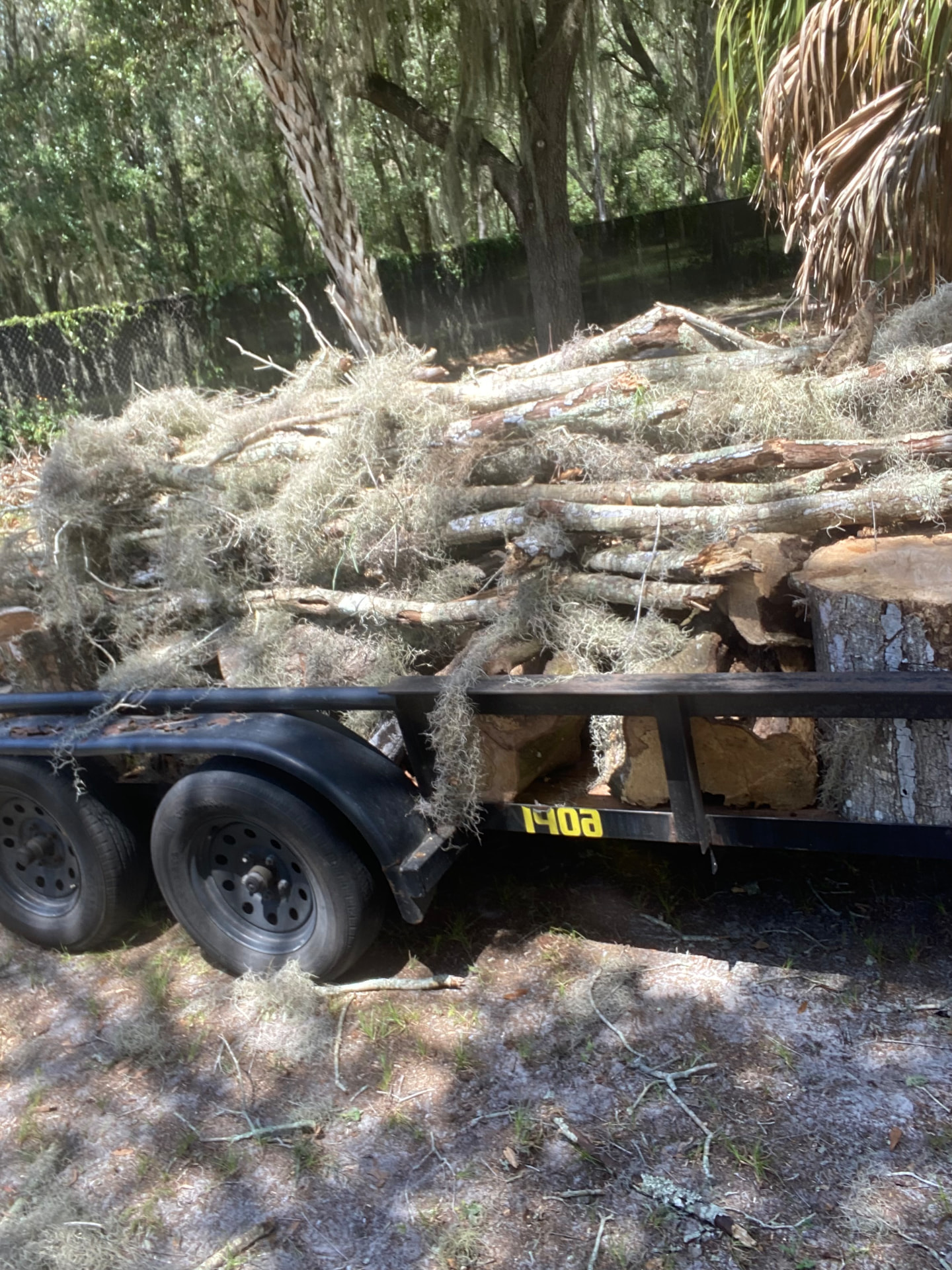
Brooksville's compact historic downtown, with courthouse-era buildings and mature street trees, calls for the same careful, low-impact rigging we use in any historic district — controlled sections, hand-carried brush, equipment kept off older masonry and sidewalks. A few minutes outside town, Southern Hills and the surrounding rural parcels flip to open acreage where we can bring in larger equipment, but where storm damage on the back of a property can go unnoticed for a season simply because owners are not walking every acre regularly. We treat a first visit to any larger Brooksville property as a chance to flag hazards the owner may not know are there yet.
Storm season across town and rural Hernando County
Brooksville's hill terrain changes how storms move through compared to flatter parts of Hernando and Pasco counties, with wind sometimes behaving differently along ridgelines than it does over open flatwoods. Lightning still does the bulk of routine summer damage to the area's pine stands, and on rural acreage a downed old-growth tree away from the house can sit for weeks before anyone notices unless the property is actively walked. Our post-storm Brooksville visits cover both the historic downtown canopy and, on request, a walkthrough of larger rural properties specifically looking for damage away from the immediate house and yard.