Local Knowledge
What Makes Plant City Trees Different
Plant City is the one place in our service area where a job is as likely to be on ten acres of strawberry ground as it is on a quarter-acre lot in the Historic District. Walden Lake and the old town blocks around the courthouse carry mature live oaks and pecans shading century-old homes, while the surrounding farmland along Turkey Creek and out toward Cork holds windbreak pines and volunteer camphors that come down across fences, irrigation lines and grove roads. Open acreage means we can usually bring bigger equipment to a Plant City job than we can in a tight subdivision, which changes how we price and schedule the work.
Trees We Work On Most in Plant City
- Live oak
- The signature tree over Plant City's Historic District homes and Walden Lake yards, often a century or more old. These get end-weight reduction and cabling at co-dominant unions rather than topping — a topped oak over an older Plant City home regrows weak wood exactly where it can least afford to fail.
- Pecan
- Common in Plant City's older residential blocks and on agricultural parcels, planted originally for shade and nuts both. Pecans are brittle-limbed and drop large branches without much warning after wet years; we deadwood them regularly rather than waiting for a limb to find a roof or a fence line.
- Camphor
- An aggressive volunteer along Plant City fence lines, ditch banks and old grove edges. Fast growing, shallow rooted and prone to early failure, camphor spreads by seed onto neighboring pasture and crop ground if left standing. We remove and grind rather than just cutting back.
- Slash pine (windbreaks)
- Planted in rows decades ago as windbreaks along Plant City's farm parcels. Individual pines snap in a straight-line wind event and take out fencing and irrigation risers on the way down; a windbreak with dead or leaning trees needs selective removal before the whole row goes.
- Laurel oak
- Found through Plant City's older residential streets and now aging out of a naturally short life span. Hollowing from the inside while the crown still looks full, which is why we check the base and root flare on every mature laurel oak before calling it sound.
Farm ground, ditch banks and open-field wind exposure
Plant City's agricultural land east of town sits low and flat, crossed by drainage ditches feeding Turkey Creek, and trees standing alone in an open field or along a fence line take wind loads a sheltered subdivision tree never sees. A windbreak pine or field-edge oak with no neighbors to break the gust often fails at the trunk rather than losing a limb, because there is nothing softening the load before it hits. When we assess acreage trees we look at how exposed the tree is to open field wind from the prevailing direction, not just its individual condition, since an otherwise sound tree in a fully exposed position can still be the one that goes down first.
Big equipment access versus tight Historic District lots
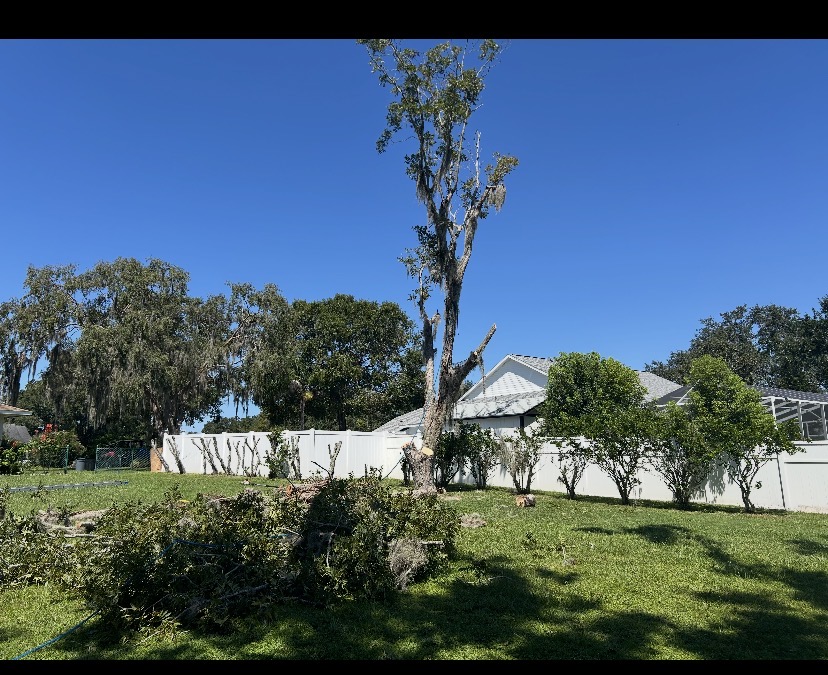
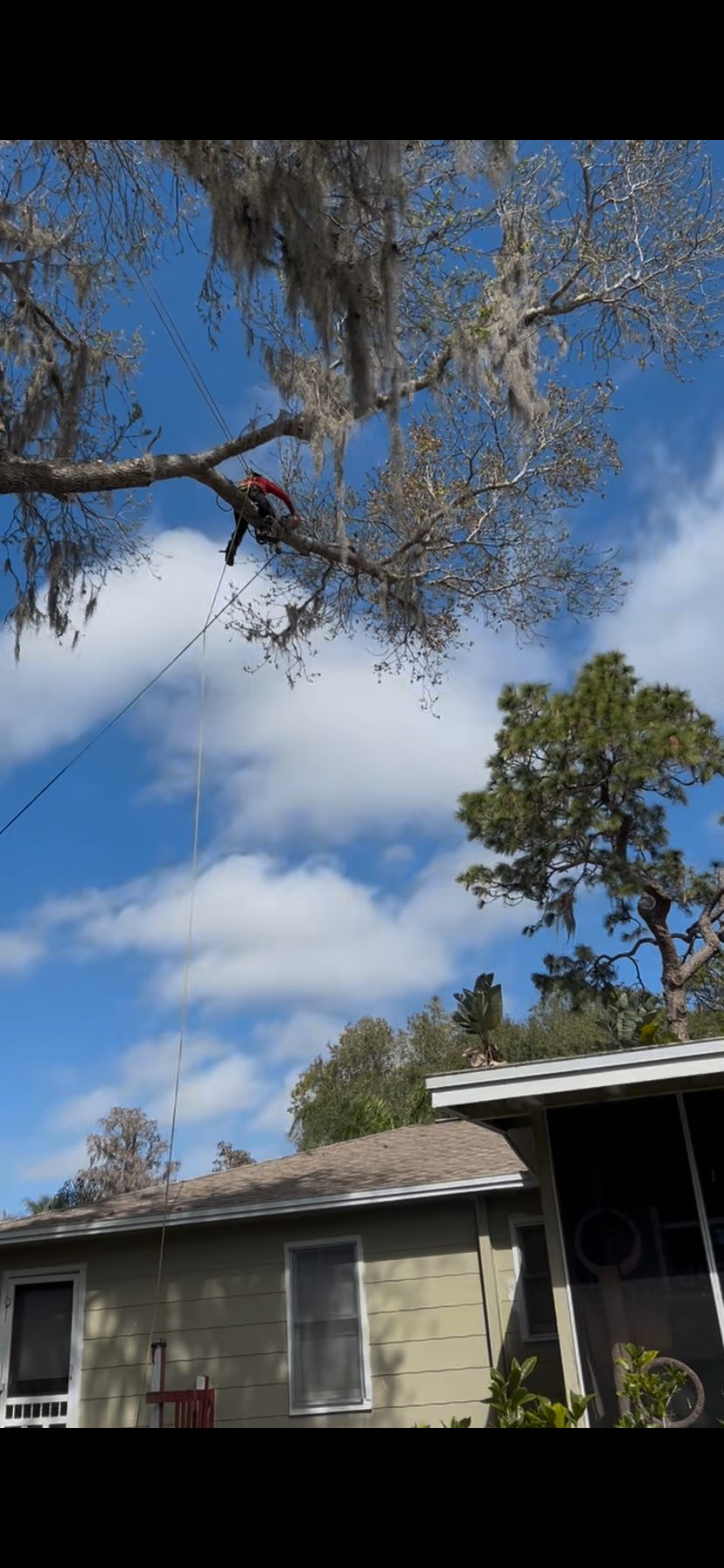
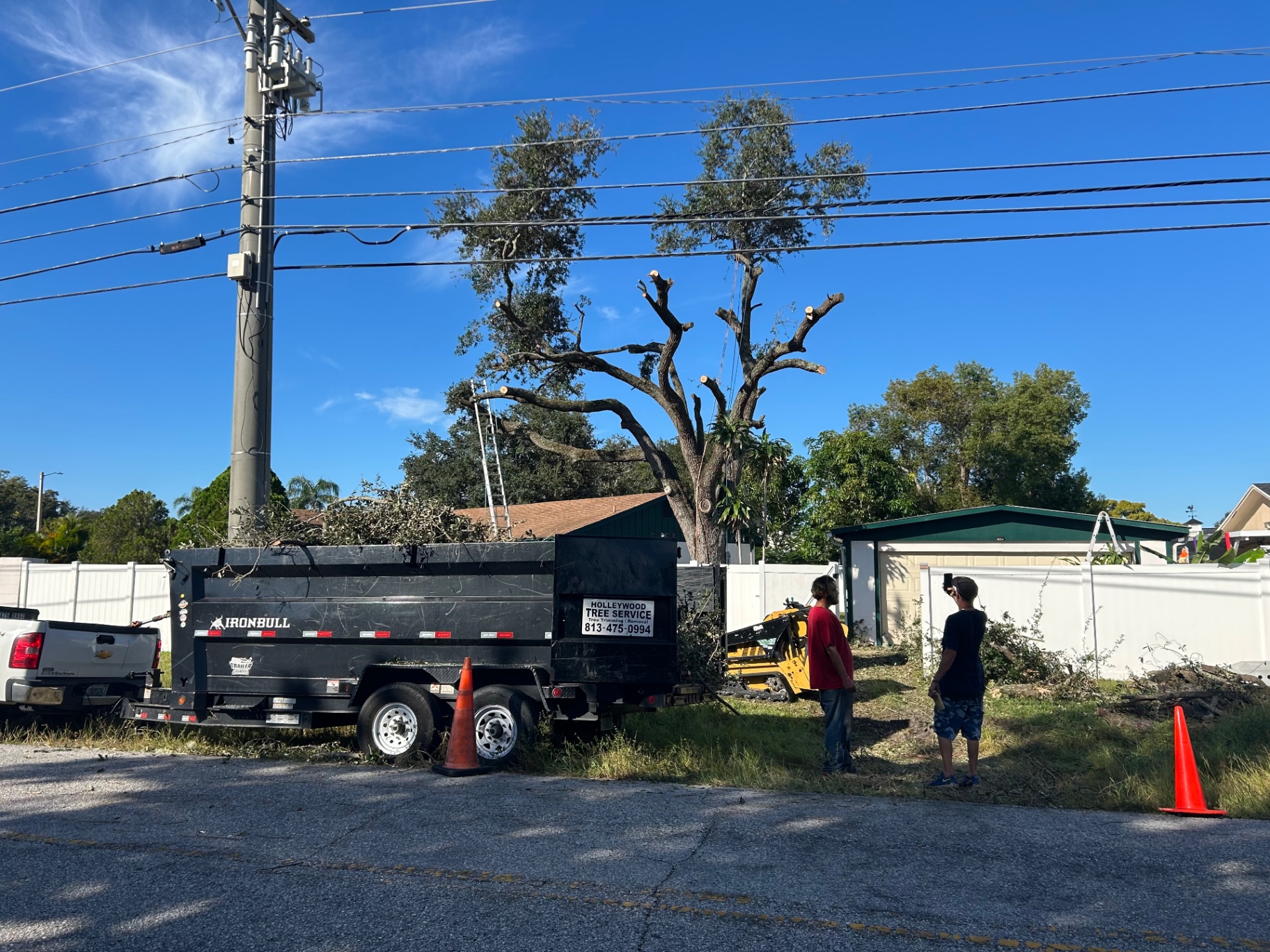
Plant City is genuinely two different kinds of job. On open acreage around Cork, Turkey Creek and Sugar Creek we can usually bring a grapple truck or larger bucket rig straight to the tree, which speeds up large removals and windbreak clearing considerably. Around Walden Lake and the Historic District, older lots with mature landscaping, narrow drives and homes close to the property line put us back into the same rope-and-rig approach we use in older Tampa neighborhoods — sectioning a tree down by hand rather than driving heavy equipment across a lawn that has been established for decades. We plan the approach on the estimate visit, not after the truck is already there.
Storm season across open farmland and old-town streets
Plant City's exposure runs from summer lightning cells that pick off tall windbreak pines and field-edge trees one at a time, to the occasional tropical system that puts real straight-line wind across open acreage with nothing to slow it down. Farm damage often means multiple downed trees across fence lines and irrigation, while Historic District and Walden Lake calls tend to be a single large oak limb over a driveway or roof. We run 24/7 storm response across both, and on agricultural properties we can chip on site or leave usable wood stacked if the landowner wants it rather than hauling everything off.