Local Knowledge
What Makes Tarpon Springs Trees Different
Tarpon Springs carries the oldest housing stock and the tightest tree access of any city we work in Pinellas County. The Sponge Docks and the Greek historic district downtown sit on small lots with century-old construction crowded close together, where a live oak planted when the docks were young now shares six feet of clearance with a wall, a power line and a neighbor's fence. A few blocks away, bayou-front lots along Whitcomb Bayou and the Anclote River carry a completely different problem: brackish tidal water reaching root zones that were never built to handle regular salt exposure.
Trees We Work On Most in Tarpon Springs
- Live oak
- The dominant tree in the historic district and around the Sponge Docks, often as old as the century-old homes beneath it. We reduce end weight and cable co-dominant unions on these rather than topping, since a topped oak over historic-district construction regrows weak wood exactly where the tightest access makes future emergency work hardest.
- Sabal palm
- Common along bayou-front lots and the Anclote River waterfront. Boots harbor pests until shaved, and tidal saturation near the bayous can stress root systems more than on a comparable inland palm; we watch for lean after high-water events.
- Southern red cedar
- Found on some of Tarpon Springs' older coastal and bayou properties, generally tolerant of salt but prone to storm damage in older, larger specimens that have accumulated deadwood over decades without regular maintenance.
- Australian pine
- An invasive holdover on some Tarpon Springs waterfront lots, shallow-rooted and brittle. We remove it on request rather than recommend keeping it, since it is one of the first trees to fail in a coastal wind event and is not part of the native canopy the city otherwise protects.
The tightest access in our whole service area
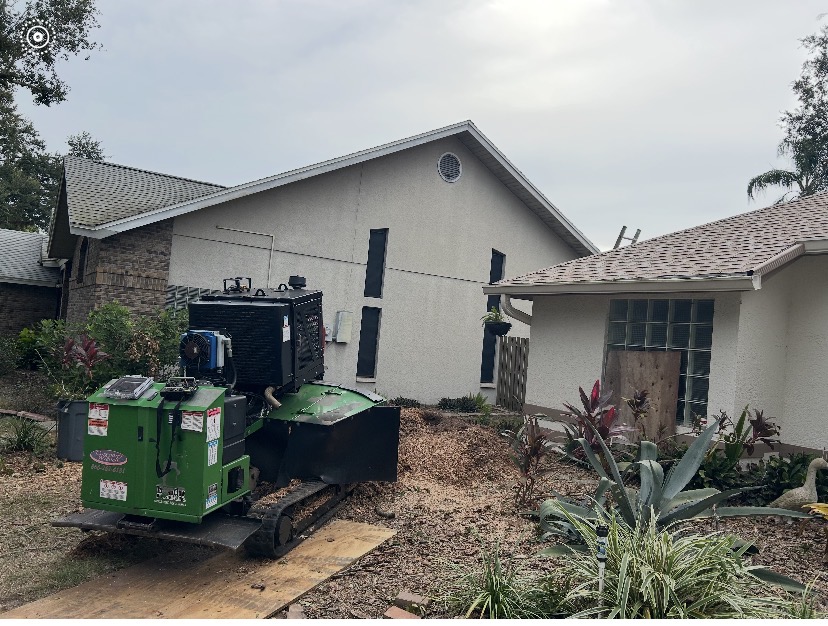
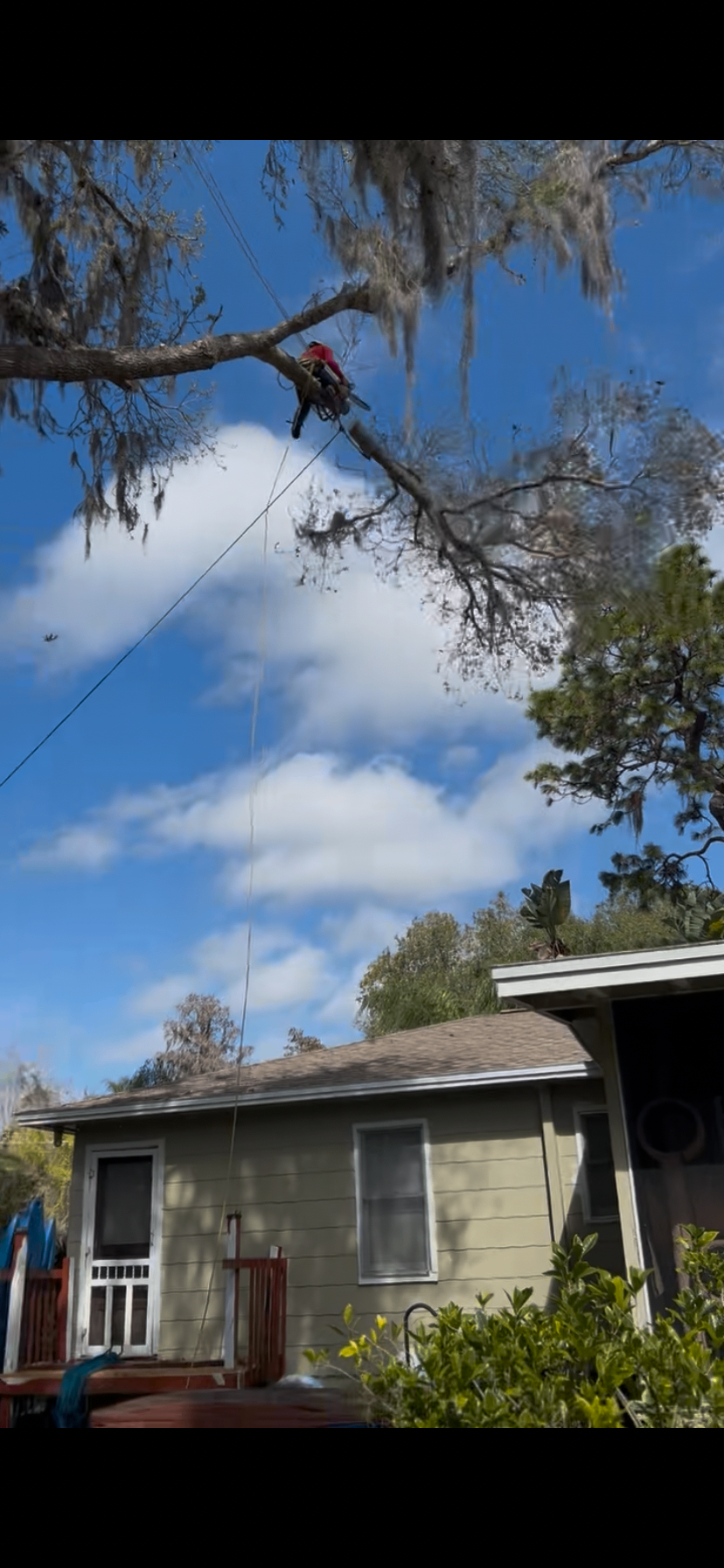
Tarpon Springs' historic district and Sponge Docks blocks were built well before pickup trucks or bucket lifts existed, and many lots give us four to six feet of total clearance between a house wall, a fence and a neighbor's property. There is often no realistic path for a chip truck or a lift to reach the back of these properties at all. We rig oaks and palms down in short, controlled sections, lower them by rope rather than dropping, and carry brush out to a truck staged on the street. It is the slowest, most labor-intensive work we do anywhere in Tampa Bay, and it is the only way a century-old oak and a century-old house both survive the job intact.
Bayou-front salt exposure and a different failure pattern
Properties along Whitcomb Bayou and the Anclote River sit close enough to brackish tidal water that root zones there see periodic salt exposure the inland historic district does not, particularly after storm surge or unusually high tides push water further into yards than usual. Sabal palms and live oaks on these bayou-front lots can look outwardly fine while root anchoring quietly weakens after a saturation event, so we check for a fresh lean or exposed roots at the waterline after any high-water event rather than waiting for visible canopy decline, which shows up much later than the actual root damage.
Storm response across two very different lot types
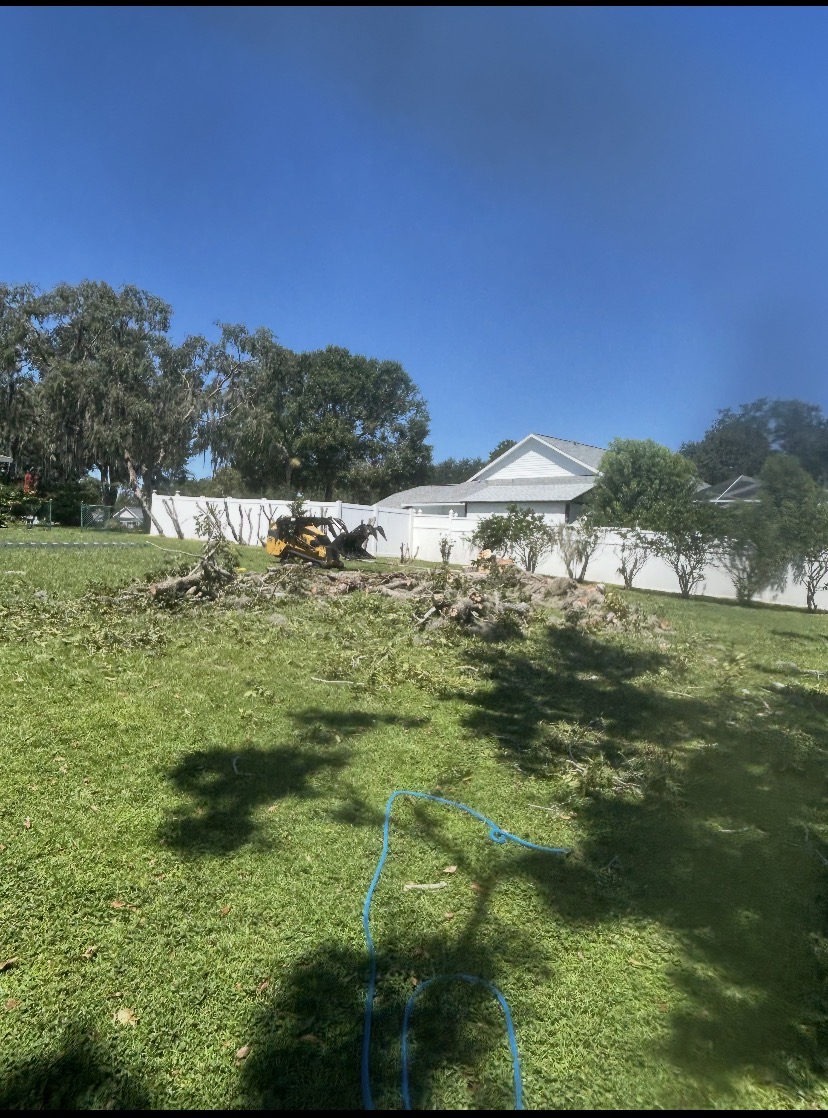
Tarpon Springs' hurricane exposure plays out differently a few blocks apart. Bayou and river-front lots see surge-driven root saturation and downed palms first, while the tightly packed historic district and Sponge Docks blocks see limbs and debris trapped in spaces too narrow for normal cleanup equipment to reach quickly. We run a priority rotation during active storms — structures and blocked access streets first — and on the historic-district blocks that often means clearing debris by hand before equipment can even get close, which we plan for rather than treat as a surprise each storm season.