Local Knowledge
What Makes Clearwater Trees Different
Clearwater is really two tree jobs stitched together by the Memorial Causeway. Out on the barrier island — Clearwater Beach and Island Estates — every tree stands in salt fog, in sand that was dredged into place decades ago, and on lots where the only access is a shared driveway packed with tourist traffic most of the year. On the mainland side, Countryside, Skycrest and the Del Oro and Morningside blocks hold an older, calmer canopy of live oak and laurel oak that grew up around 1960s and 70s ranch homes with none of the salt burden and most of the room to work. We schedule the two sides differently for exactly that reason.
Trees We Work On Most in Clearwater
- Sabal palm
- The backbone planting on Clearwater Beach and Island Estates because it tolerates salt spray better than almost anything else. Boots left unshaved harbor roaches and rats within a few blocks of hotels and rentals, and we get called constantly to clean up fronds blown into pools and onto walkways during tourist season.
- Australian pine
- An invasive holdover on Clearwater's coastal lots, planted decades ago as a quick windbreak. It is shallow-rooted, brittle, and one of the first things to go over in a squall on the island. We remove it on sight when a client asks and do not recommend replanting it.
- Live oak
- Common through Countryside and the older mainland neighborhoods, generally healthier here than on the island because it is spared direct salt spray. We reduce end weight and cable co-dominant unions on the mature ones rather than topping, which is the single most common bad advice homeowners get from unlicensed crews.
- Laurel oak
- Planted heavily in Skycrest and Del Oro when those subdivisions went in, now aging into the internal decay window. A full canopy does not rule out a hollow base, so we check the root flare on every mainland laurel oak before we sign off on it.
- Queen palm
- Common in Countryside yards and along Clearwater's mainland streets. Heavy seed drop stains driveways and clogs pool equipment. We trim to the horizontal and skip the hurricane cut, which weakens the bud long term.
Island salt versus mainland shade
Clearwater Beach and Island Estates trees live in constant salt aerosol off the Gulf and the Intracoastal, which browns fronds and needles, thins canopy density, and pushes root systems into pure dredged sand that holds almost no water reserve. Trees there dry out and decline faster than the same species three miles inland. Countryside, Skycrest and the mainland neighborhoods sit on ordinary Pinellas sand without the direct salt load, so live oaks and laurel oaks there fail more from age and internal decay than from salt stress. We diagnose differently depending on which side of the causeway the tree is on, because the same brown leaf tip means two different things in Island Estates than it does in Countryside.
Shared driveways, tourist traffic and tight island lots
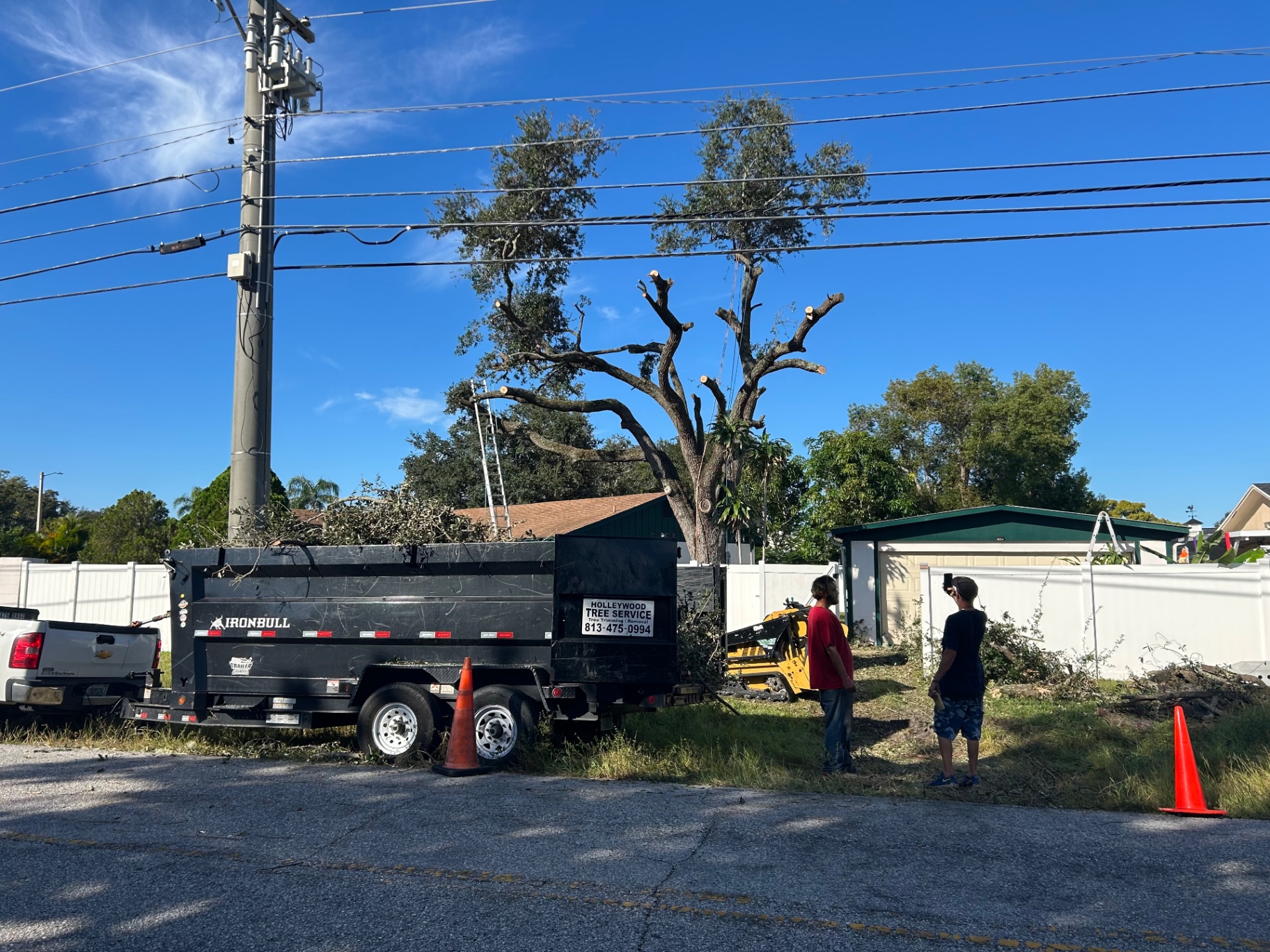
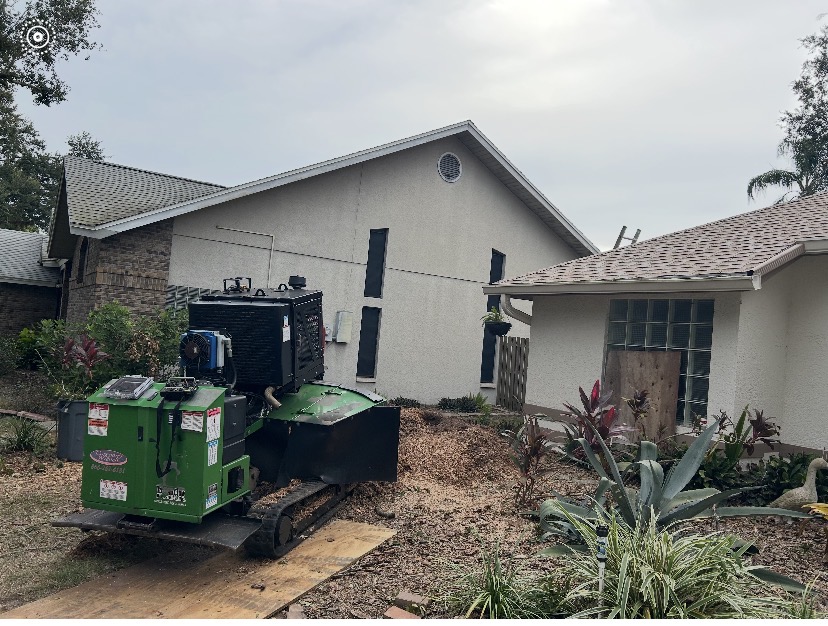
Getting a bucket truck or chipper onto a Clearwater Beach property during season is its own project. Many Island Estates and beachside lots share a single narrow driveway with a rental unit or a marina slip, and Gulfview and Mandalay traffic makes staging a chip truck curbside a real logistics problem, not a minor one. We schedule island jobs around tourist-season traffic patterns and off-peak hours where we can, and where a lot genuinely has no truck access we rig sections down by rope and hand-carry brush to the truck rather than trying to force equipment down a shared drive. Countryside and mainland lots are usually wider and more forgiving, so those jobs move faster.
Hurricane exposure on an open peninsula
Clearwater Beach and Island Estates take direct Gulf wind and storm surge with almost nothing to break it, and post-storm we see toppled Australian pines and downed sabal fronds tangled with dock lines and pool cages before we see structural oak damage. Mainland Clearwater takes more conventional squall-line and outer-band wind, with snapped laurel oak leaders the common call. During an active storm we run a citywide rotation, clearing trees on structures and blocking evacuation routes first, then hangers, then cleanup, and we photograph every stage since insurers scrutinize barrier-island claims closely.