Local Knowledge
What Makes St. Petersburg Trees Different
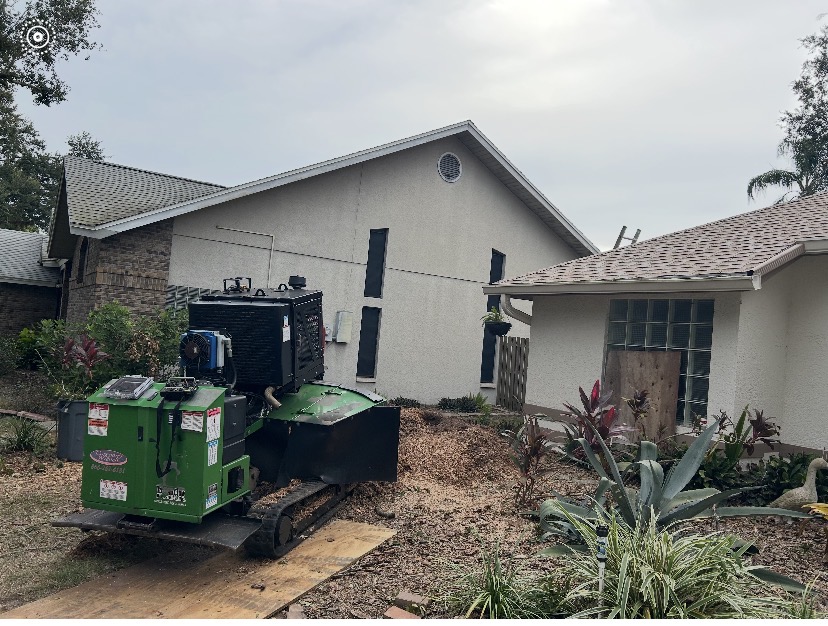
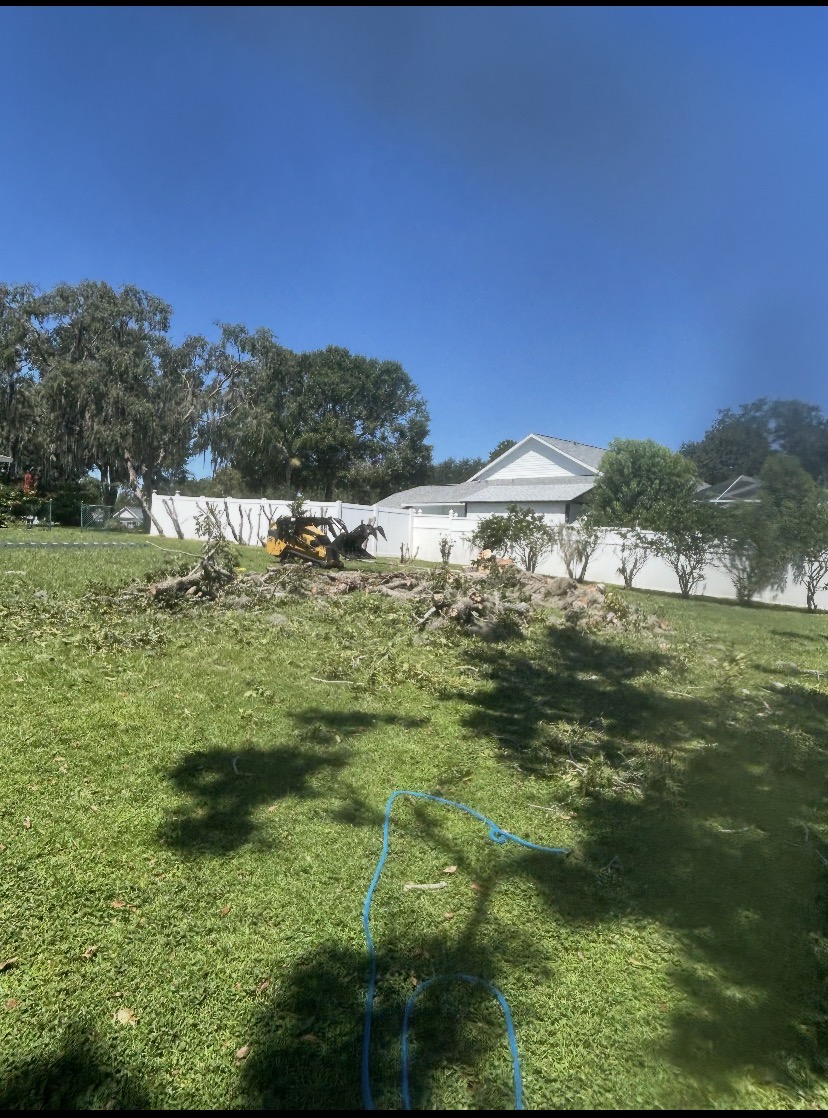
St. Petersburg's oldest neighborhoods were built around trees the city has spent a century protecting, and that shapes almost every job we take on there. Old Northeast and Snell Isle carry mature live oaks that arch clean over brick streets barely wide enough for a garbage truck, Kenwood and Crescent Lake have a mix of oak, banyan and mature palm crowding 1920s bungalow lots, and Shore Acres and Coquina Key sit low and close to the water with a different, wetter root story. We rank for stump work here because we do a lot of it — St. Pete's older canopy leaves behind a lot of stumps once decades-old trees finally reach the end.
Trees We Work On Most in St. Petersburg
- Live oak
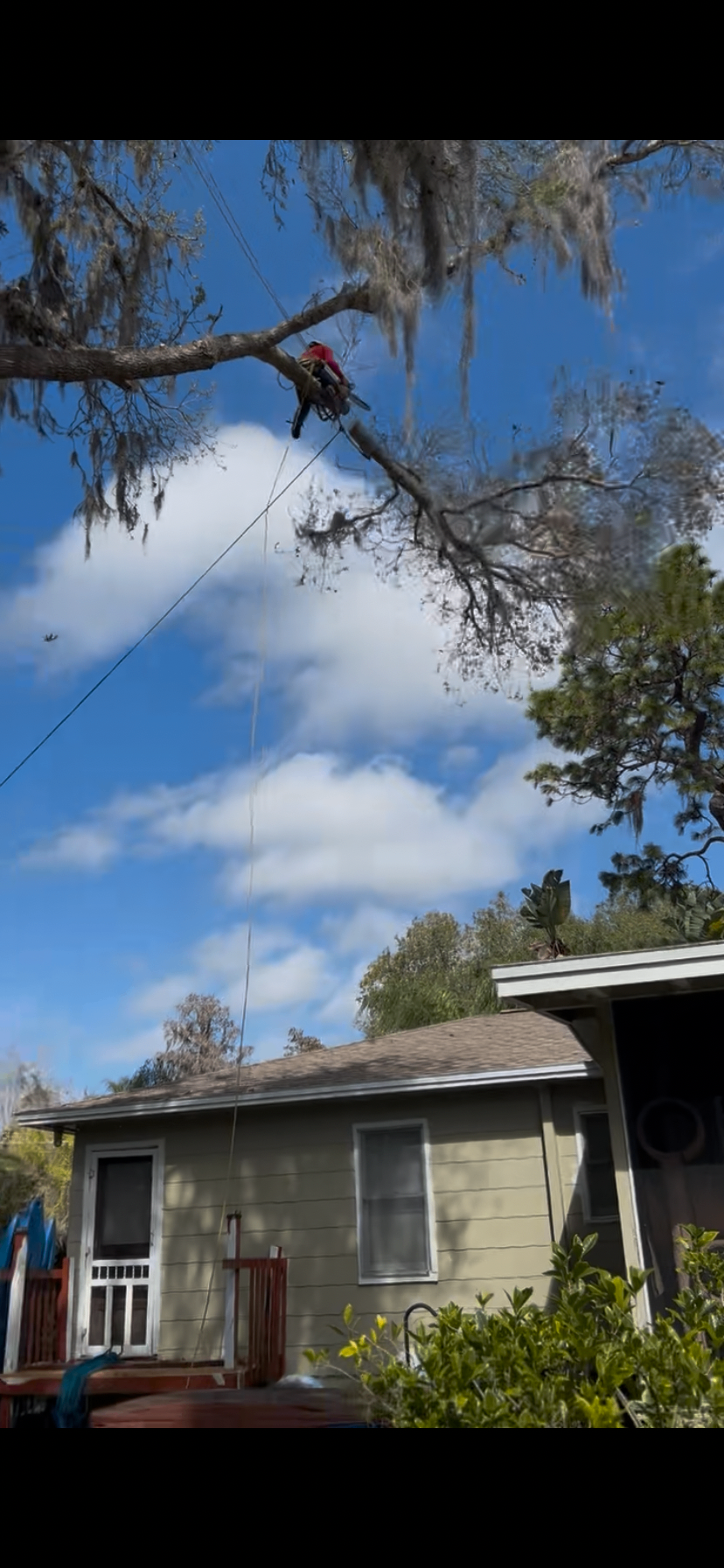
- The signature Old Northeast and Snell Isle tree, often original to the neighborhood's early-1900s platting and large enough to fall under city protection. Long limbs arching over brick streets pick up serious end weight over decades, and we reduce that weight and cable co-dominant unions rather than topping a tree the city has an interest in keeping.
- Banyan and strangler fig
- Scattered through older St. Pete yards, especially around Crescent Lake and Kenwood, planted generations ago as a novelty and now enormous. Aerial roots and lateral spread lift sidewalks and encroach on neighboring lots, and pruning one back without killing the crown takes real judgment.
- Laurel oak
- Common street tree throughout the older grid neighborhoods, now old enough that internal decay is common under a canopy that still looks full. We check the base and root flare on every one before recommending anything, since a hollow laurel oak over a brick street is a liability the city and the homeowner both care about.
- Sabal palm
- Planted along St. Pete's older streets and in Shore Acres yards near the water. Boots harbor pests until shaved, and salt-tinged groundwater near Tampa Bay and the bayous can stress root systems in the lowest-lying blocks.
- Jacaranda
- A prized ornamental in older St. Pete yards for its spring bloom, but brittle-wooded and prone to limb failure after wet years. We deadwood these regularly rather than letting a big limb find a fence or a car.
A canopy the city has spent decades protecting
St. Petersburg has one of the strongest tree-protection cultures in Tampa Bay, and Old Northeast, Snell Isle and Kenwood residents notice and enforce it as much as the city does. Grand live oaks and specimen trees are generally protected by ordinance, which means most removals in these neighborhoods go through a documented review rather than a homeowner's judgment call alone. That is a good thing for the canopy but it changes how we work a job — we measure trunk diameter, photograph decay and structural defects, and build the record the city's process expects before a permit application ever goes in, rather than showing up with a chainsaw and hoping.
Narrow alleys, brick streets and lots with no side yard
Old Northeast's brick paving and narrow rights-of-way were built for streetcars, not chip trucks, and a lot of Snell Isle and Kenwood bungalows sit on lots with three or four feet of clearance between houses. We rarely drive equipment onto these properties. Instead we rig oaks down in controlled sections and carry brush out to a truck staged on the street, or set a permitted crane in the road and pick a trunk straight up and over the roof when there is no interior access at all. It is slower than a suburban removal with a wide driveway, and it is the only way these historic blocks and their sidewalks and brick paving come through undamaged.
Bayfront wind and why stumps outnumber standing hazards here
St. Petersburg sits on a peninsula with Tampa Bay on one side and the open Gulf beyond the barrier islands, so wind off open water reaches these old neighborhoods with little to slow it down, and Shore Acres and Coquina Key add tidal flooding that saturates root zones in the lowest blocks. The result over decades is a lot of mature trees finally coming down at the end of their life, leaving behind large stumps in yards too small or too rooted-in for a homeowner to deal with alone. That backlog is a real part of why we grind so many St. Pete stumps — old canopy, small lots, and a city that historically leaned toward saving trees rather than removing them early.