Local Knowledge
What Makes Trinity Trees Different
Trinity is gated golf-course country, and nearly every job here starts with the same question: what will the architectural review committee allow. Champions Club, Fox Wood, Heritage Springs and Thousand Oaks are built around manicured fairways and a landscaped palette of live oak, laurel oak and clean-trimmed sabal palms, and the deed restrictions governing that look are specific and actively enforced. We do more paperwork per job in Trinity than almost anywhere else we work, and we plan the physical job around not marking a blade of turf.
Trees We Work On Most in Trinity
- Live oak (fairway and street tree)
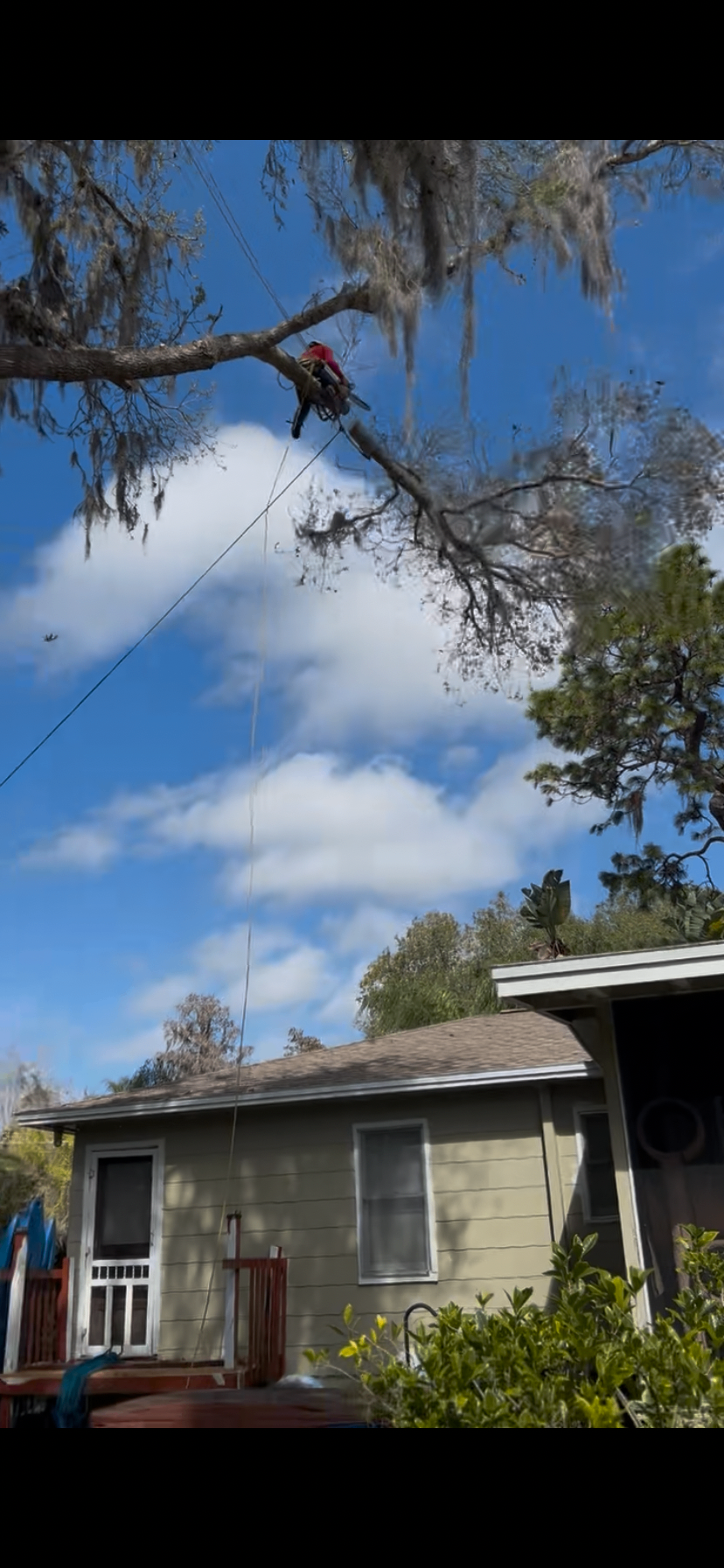
- Trinity's default shade tree along golf frontage and community entrances, planted in clusters that look uniform from the street. We prune to a single clean leader and manage end weight so the tree keeps the silhouette the HOA expects while staying structurally sound.
- Laurel oak
- Present in Trinity's older sections near Trinity East and mixed into some of the golf-adjacent common areas. These decline internally faster than live oaks and a cavity at the base is grounds for removal even when the HOA would rather keep the canopy full.
- Sabal palm (manicured)
- Trinity's HOAs generally want sabal palms boot-shaved and trimmed to the horizontal on a strict schedule, not left natural. We keep them on that cosmetic standard while never giving a hurricane cut, which shortens palm life and looks worse within a season anyway.
- Queen palm
- Common along Trinity's community entrances and pool areas. Seed pods drop heavily onto cart paths and driveways if not managed, and HOA rules in several Trinity communities specify a maintenance interval we build into recurring service.
- Crape myrtle
- Widely planted for the seasonal bloom along Trinity streetscapes. Improper 'crape murder' topping is common from landscape crews cutting corners; we prune to natural form at proper nodes so the tree flowers well without the stubbed, clubbed look that draws HOA complaints.
Manicured turf, irrigation lines and zero tolerance for damage
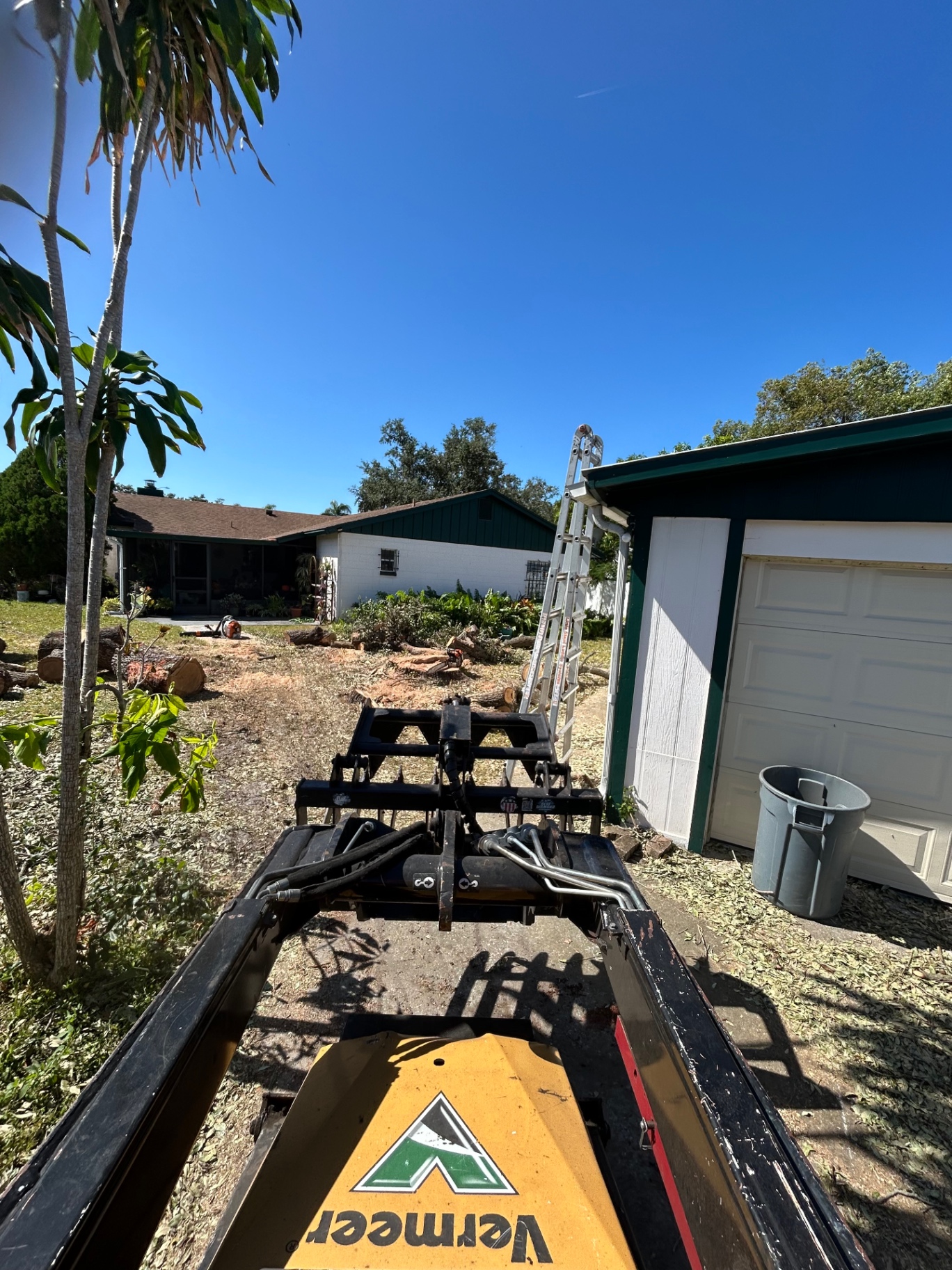
A Trinity property is graded, sodded and irrigated to a standard most other neighborhoods do not maintain, and a rutted lawn or a severed irrigation line here is a visible, immediate complaint rather than a minor inconvenience. We plate and mat every equipment path before a crane or bucket truck moves across turf, hand-locate irrigation heads and lines before setting outriggers, and restore any disturbed sod or mulch bed as part of the job rather than as an afterthought. On golf-frontage lots we also coordinate timing so debris and equipment never sit visible from the fairway during play, which matters to Trinity homeowners as much as the tree work itself.
Gate access, ARC approval and getting the paperwork right the first time
Every gated Trinity community — Champions Club, Fox Wood, Heritage Springs, Thousand Oaks, Wyndtree — has its own architectural review process, and getting equipment through the gate is only step one. Several communities require submitted photos, a scope of work and a certificate of insurance before an ARC will approve tree work, and redoing a job because it was not pre-approved costs a homeowner real time and money. We prepare the documentation up front, send insurance certificates directly to the management company, and confirm the specific pruning standard — Trinity associations often want a tighter, more formal look than a bare ANSI minimum — before the first cut.
Storm behavior in a landscaped, wind-exposed golf community
Golf-course lots are more wind-exposed than a typical wooded subdivision because the fairways themselves are open corridors with nothing to break the wind, which means Trinity's tree-lined perimeters take a harder direct hit during summer squalls and tropical systems than the canopy density might suggest. We prioritize storm response on trees threatening homes along fairway frontage first, then move through interior streets, and we keep debris staging off common areas and cart paths so a downed limb does not become an HOA violation on top of a storm event.