Local Knowledge
What Makes Riverview Trees Different
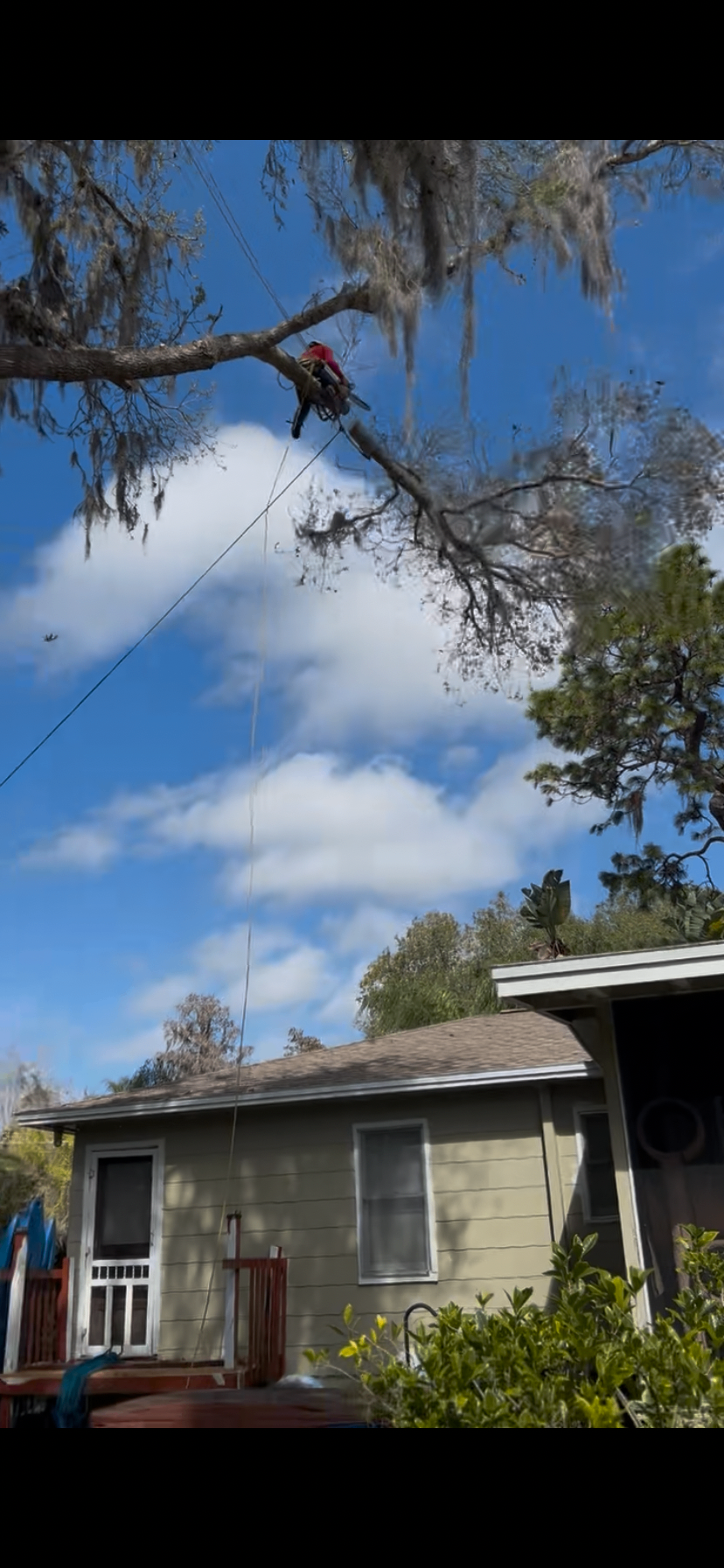
Riverview has grown faster than almost anywhere in Hillsborough County, and its canopy tells that story. Newer communities off Big Bend, Boyette and Rhodine hold young planted oaks, maples and palms that need shaping now to avoid structural problems in ten years, while the older properties along the Alafia River and the U.S. 301 corridor carry mature live oak, laurel oak and pine that have already outgrown the homes built beneath them. We work both ends of that spectrum in Riverview weekly.
Trees We Work On Most in Riverview
- Live oak
- Riverview's long-term shade tree. Young ones planted in newer subdivisions need early structural pruning to establish a single dominant leader; mature ones along the river need end-weight reduction and, where two leaders have grown together with included bark, cabling.
- Laurel oak
- Heavily planted through Riverview's earlier developments and now aging out. Internal decay, root flare cavities and sudden limb drop — assessed at the base, not the canopy.
- Slash and loblolly pine
- Remnant stands throughout the Boyette and Balm-Riverview corridors. Pines break instead of bending, and lightning kills them standing every summer. Anything dead and within reach of a structure comes out.
- Red maple and sweetgum
- Common in Riverview's wetter, low-lying areas near the Alafia and its drainage. Both are weak-wooded and shed limbs readily; regular deadwooding keeps them safe rather than replacing them.
- Sabal, queen and Washingtonia palm
- Everywhere in Riverview's newer communities. Annual trimming, seed pod removal and sabal trunk shaving — no hurricane cuts, which shorten palm life.
The Alafia River corridor: wet soil, leaning trunks and bank erosion
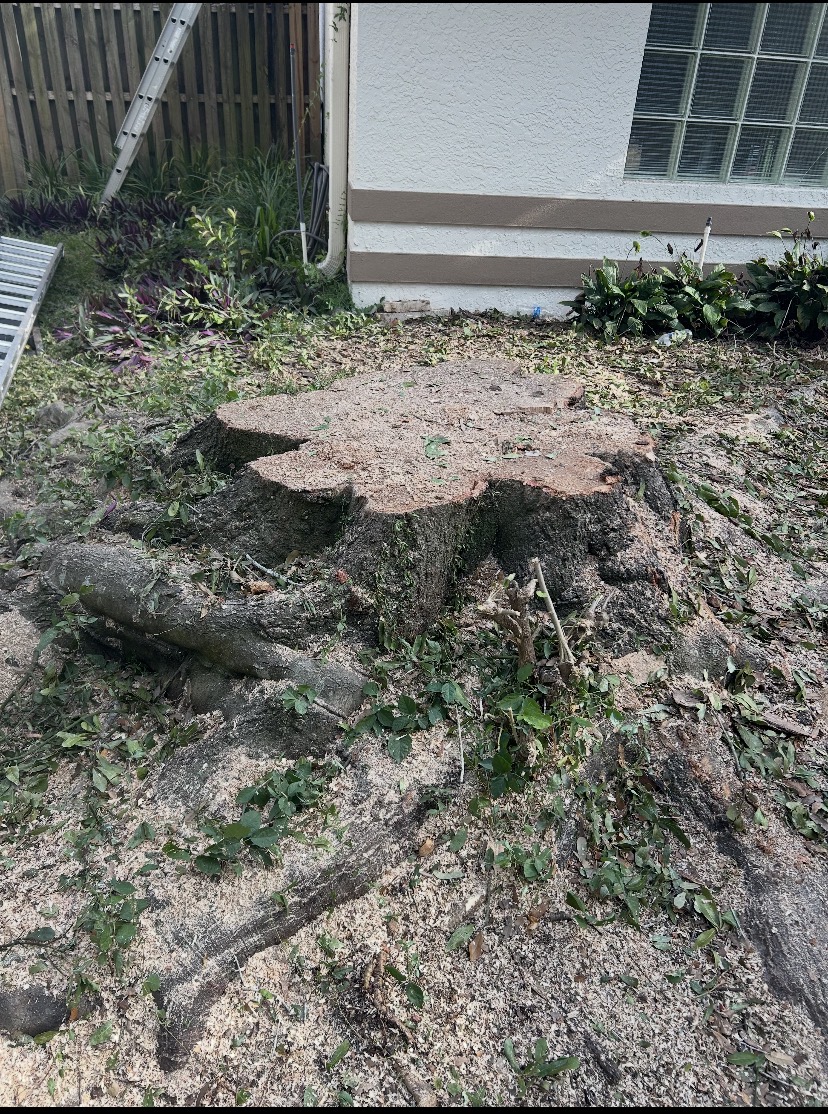
Properties near the Alafia and its tributaries sit on saturated, low-lying ground for much of the wet season. Roots in permanently wet soil stay shallow and the anchoring is poor, so trees along the river lean progressively and eventually go over intact. The tells we look for on a Riverview river-side lot are a widening lean, cracked or heaving soil on the uphill side, and exposed roots where the bank has eroded out from under the plate. Once the plate is moving, cabling will not save the tree — it comes out before it takes the fence, the shed or the neighbor's roof with it.
New construction, compacted soil and young trees planted wrong
A lot of Riverview's newest neighborhoods were graded, compacted and then landscaped in a hurry. We routinely find young oaks and maples still girdled by nursery wire and burlap, planted too deep with no visible root flare, or left with two competing leaders that will split at fifteen years. Every one of those is cheap to correct now and expensive to correct later. When we are out for anything else on a Riverview property we will point out what is fixable while it still is.
Storm exposure and Riverview response
Riverview catches outer-band wind and heavy rainfall, and the combination — saturated ground plus sustained gusts — is what puts whole trees over here rather than just limbs. Our Riverview storm work runs on the same 24/7 rotation as the rest of the region: trees on structures and blocked driveways first, then hangers and standing hazards, then hauling. Everything is photographed before and after so your insurer sees the condition we found and the work we performed.