Local Knowledge
What Makes Carrollwood Trees Different
Carrollwood's canopy is the most mature of any suburb we work in — laurel oaks, camphors and live oaks planted when the neighborhood went in during the 1960s and 70s have had fifty-plus years to grow into roofs that were never designed to carry that kind of overhang. Around Lake Carroll and through Original Carrollwood and Carrollwood Village, the trees are now bigger than the houses beneath them, and Northdale and Village Estates are catching up fast behind them. Most calls we get here are about a tree that has simply outgrown the lot it was planted on decades ago.
Trees We Work On Most in Carrollwood
- Laurel oak
- The dominant tree across original Carrollwood, most of it now fifty to sixty years old and approaching the far end of a laurel oak's natural life span. These decay from the inside while the crown still looks full, and sudden large-limb failure over a 1970s roof is one of the most common calls we take in this neighborhood.
- Camphor
- Widely planted in Carrollwood's early landscaping and now oversized for the yards holding them. Camphor wood is brittle and prone to splitting at broad, poorly attached unions, and many original Carrollwood camphors are now large enough that a failure would land directly on the house.
- Live oak
- Present throughout Carrollwood Village and around Lake Carroll, generally the healthiest long-term option of the mature canopy here. We reduce end weight and cable co-dominant leaders on these rather than removing trees that, unlike the laurel oaks and camphors nearby, still have decades of sound life left.
- Queen palm
- Common around Lake Carroll and Carrollwood pool properties. Heavy seed pods drop into pools and onto pavers if left untrimmed, and we trim to the horizontal on a regular schedule rather than the hurricane cut that shortens a palm's life.
- Water oak
- Scattered through Northdale and Country Place, sharing the same short-lived, decay-prone pattern as laurel oak. We check root flare and listen for hollow sound in the trunk before signing off on any older water oak as sound.
Fifty-year-old canopy over homes never built to carry it
Original Carrollwood and the streets around Lake Carroll were landscaped when the subdivision was new, and the laurel oaks and camphors planted then have had five decades to reach full size over roofs, additions and pool cages that came later. A tree that size was never sized against the house it now overhangs, and the failure mode we see most in Carrollwood is a large limb coming down onto composition shingle roofing that was never designed to shed that kind of weight. We prioritize canopy reduction and deadwood removal over these older homes specifically because the roof-to-tree ratio here is worse than almost anywhere else we work.
Lake Carroll frontage and established landscaping
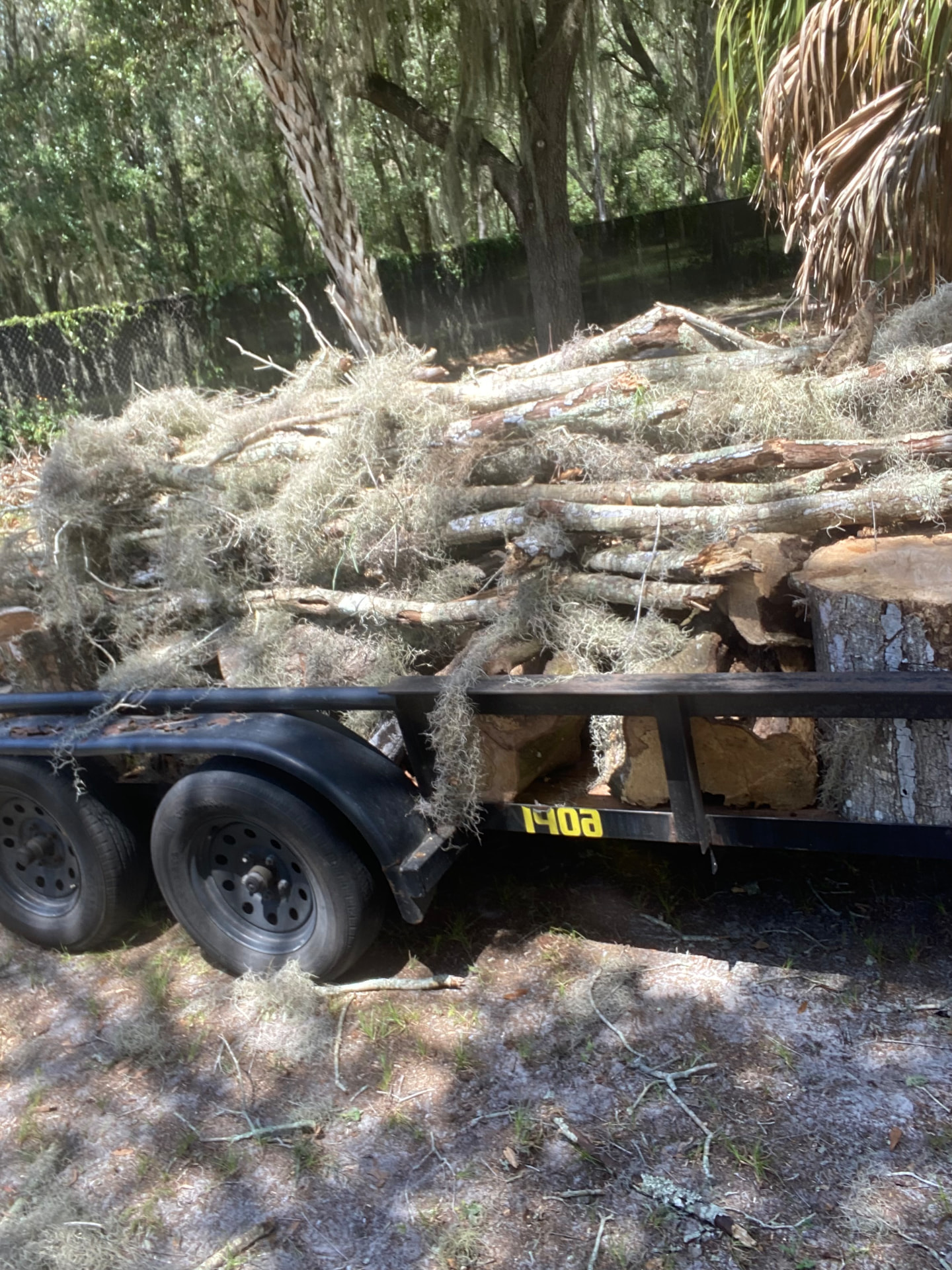
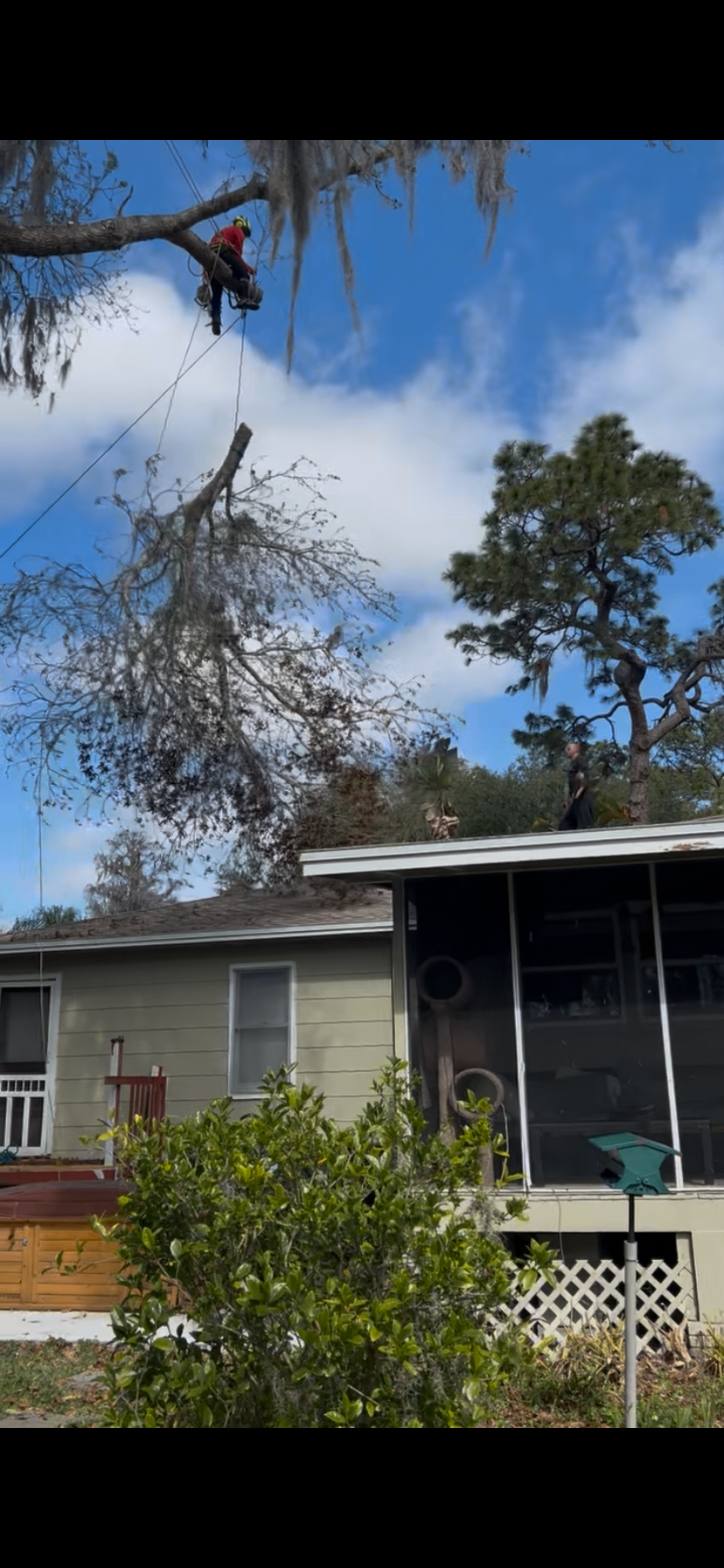
Properties fronting Lake Carroll carry mature landscaping — irrigation systems, established beds, retaining walls — built up over decades, and none of it survives a careless removal. We plan equipment placement around what is already there rather than the other way around, using mats to protect turf and hand-carrying brush where a chipper truck cannot reach without crossing a bed or a low wall. Original Carrollwood's older, narrower driveways also limit what equipment can get to the back yard at all, which more often than not means sectioning a tree down by rope rather than bringing a lift around the side of the house.
Storm season and Carrollwood's aging trees
Carrollwood sits inland enough to avoid direct surge but still takes the full brunt of summer squall lines and afternoon lightning, and the neighborhood's aging laurel oaks and camphors are exactly the trees most likely to fail in that kind of wind event. Our post-storm Carrollwood sweep looks first at hangers left in these older canopies, since a fifty-year-old laurel oak with internal decay can drop a limb days after the storm has passed with no further wind at all. We clear standing hazards and hangers first, then handle cleanup, and photograph the whole process for insurance documentation.