Local Knowledge
What Makes Valrico Trees Different
Valrico's canopy problem is a timing problem. Bloomingdale, River Hills and the Diamond Hill area were built out through the 1980s and 1990s, and the laurel oaks planted along those streets and in those back yards went in at the same time, on the same schedule, from the same nursery stock. Three decades later those trees are all reaching the end of a laurel oak's working life together, and a lot of them have grown straight into pool cages and lanais that came later. We get called to Valrico as much for a single overgrown oak crowding a cage as for storm damage, and it is usually the same tree causing both problems.
Trees We Work On Most in Valrico
- Laurel oak
- The default Valrico street and yard tree, and the one behind most of our calls here. Whole blocks in Bloomingdale were planted the same year, so they decline together — internal rot advances while the crown still looks full, and a string of Valrico laurel oaks can fail in the same storm for the same reason.
- Water oak
- Common alongside laurel oak in River Hills and Twin Lakes yards, and just as short-lived. Water oaks hollow from wounds and old pruning cuts faster than most homeowners expect, and a large water oak leaning over a lanai roof is a removal conversation, not a trim.
- Live oak
- Scattered through older Valrico lots and worth the extra work to keep. We reduce end weight and cable co-dominant unions rather than take these down, since a properly maintained live oak here will outlast every laurel oak on the street.
- Slash pine
- Remnant pines stand behind some Buckhorn and Copper Ridge properties, tall and close to rooflines that were not there when the pines were young. Lightning kills them standing, and a browning pine over a roof moves to the top of our list.
- Camphor and Chinese elm
- Volunteer growth along Valrico fence lines and drainage swales. Fast, weak-wooded, and prone to failure well before they get large. Cheaper to remove young than to deal with after a storm puts one through a fence.
A canopy that all went in on the same clock
Bloomingdale and the surrounding Valrico subdivisions were built out over a fairly narrow window, and the builder-grade laurel and water oaks planted then are now nearly all in the same 40–55 year decline range together. That matters because it means a single storm can take down several trees on one street rather than one bad tree standing out from healthy neighbors. When we walk a Valrico yard we are looking at the whole block's planting era, not just the tree in front of us, and we tell homeowners honestly when a tree that looks fine today is on the same clock as the one that just came down two doors over.
Pool cages, lanais and how the trees grew into them
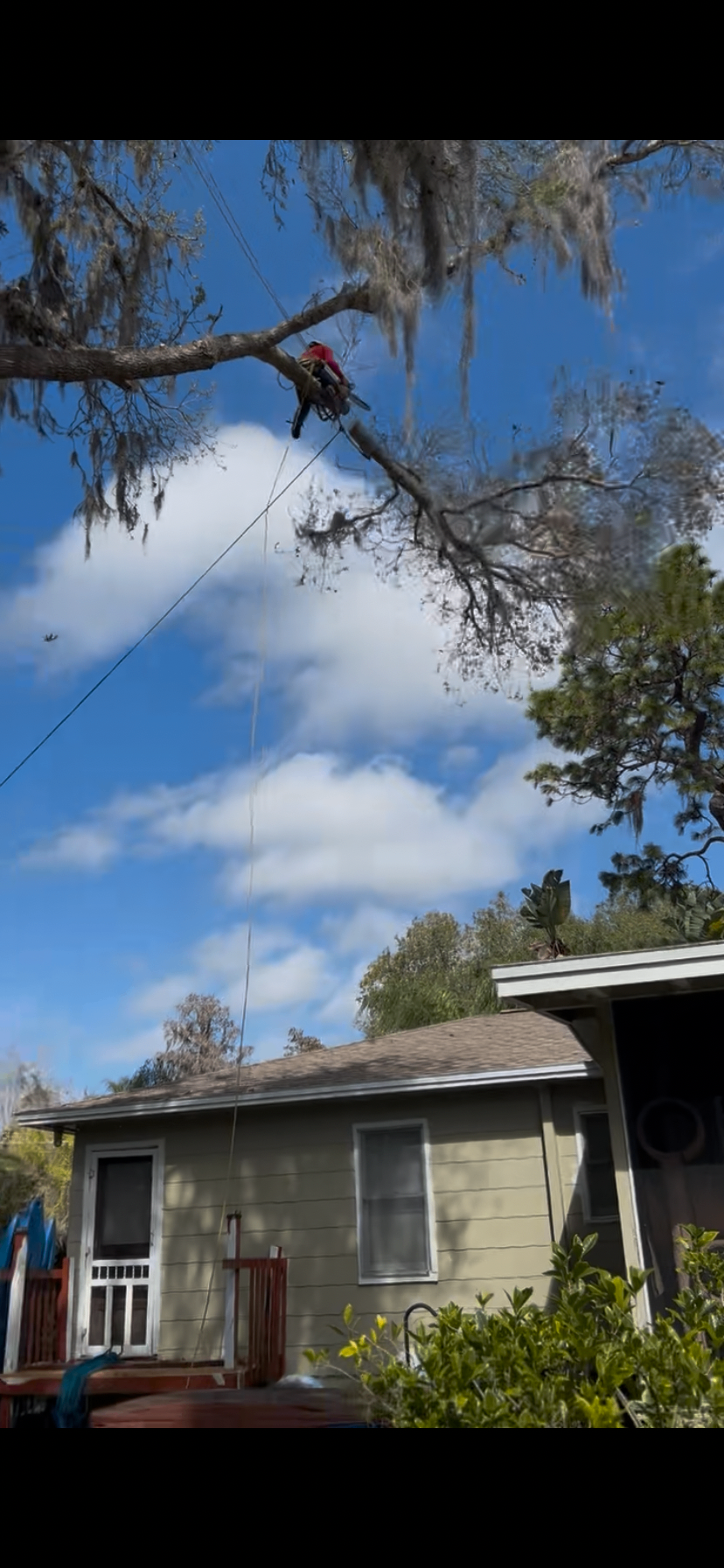
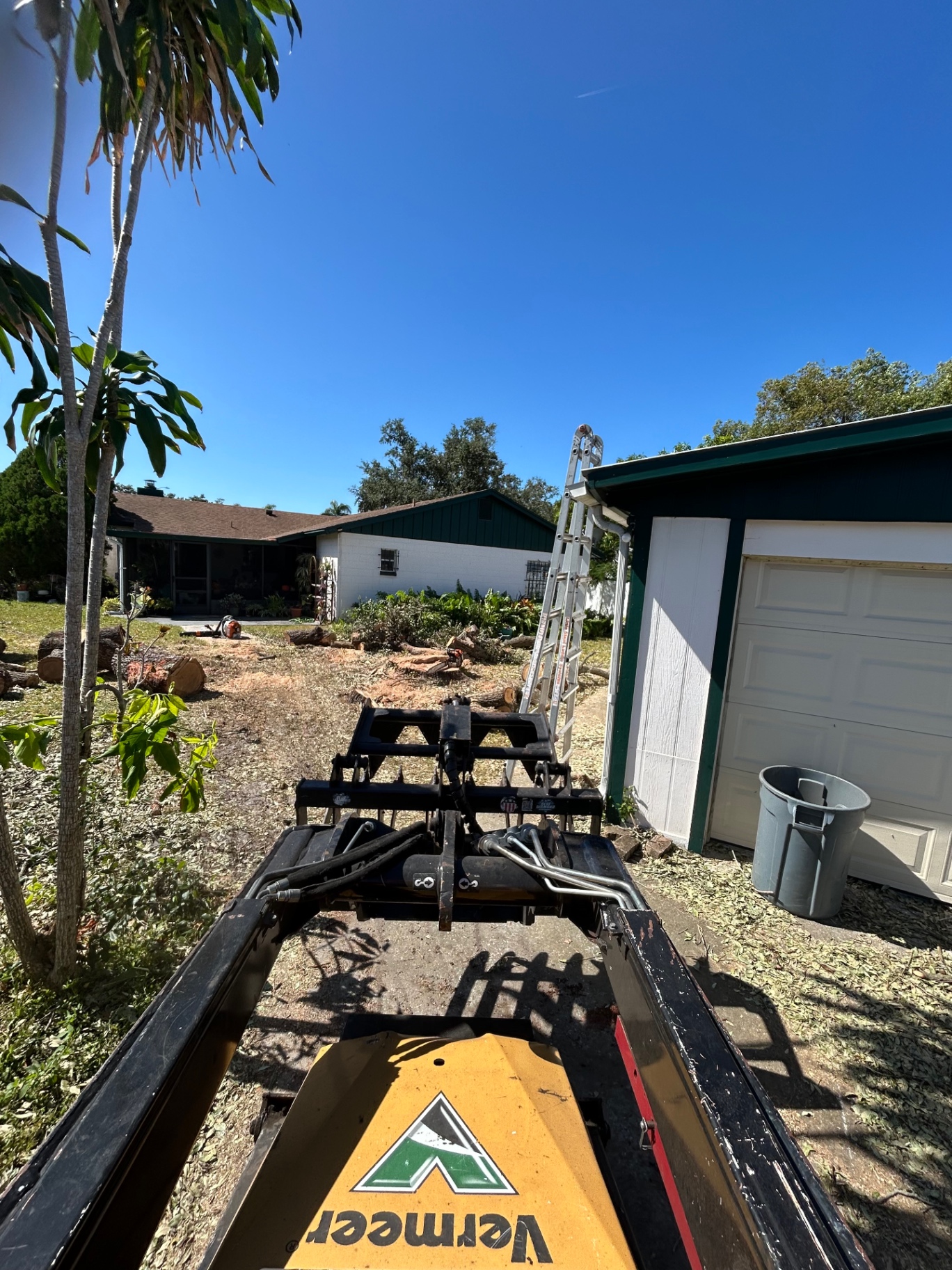
A huge share of Valrico's laurel oaks and live oaks were already mature when screen enclosures went up around the pools beneath them, and thirty years of growth has since pushed limbs directly over the cage frame. Dropping wood through a screen enclosure is the single most expensive mistake a careless removal can make in Bloomingdale and River Hills, so we rig every cut over a cage rather than letting anything free-fall, and we often bring a mini crane down the side yard to pick sections straight up and clear rather than swinging them across the pool.
Storm season behind the Alafia headwaters
Valrico takes summer squall-line wind rather than direct surge, and because so many of its oaks are already past their structural prime, storm damage here tends to be whole-tree failure rather than isolated limb breaks. After a line moves through we run a Valrico sweep prioritizing trees down on structures, then hangers left in neighboring canopies, then cleanup. Because so many of these oaks share the same age and defects, one storm often means several calls from the same street, and we schedule the block together when we can.