Local Knowledge
What Makes Safety Harbor Trees Different
Safety Harbor is a small city that treats its canopy like an asset, not a nuisance, and that shapes how carefully we work here. Downtown, mature live oaks and magnolias shade Main Street and the historic blocks around Philippe Park, some old enough to have been standing when the city incorporated. Harbor Oaks and the bluff-side streets above Old Tampa Bay carry big, established oaks on lots with real elevation change, while Green Springs and Briar Creek run more typical suburban canopy. Nearly every removal conversation here starts with whether the tree can be saved instead, because the city and its residents generally want it to be.
Trees We Work On Most in Safety Harbor
- Live oak
- Safety Harbor's defining tree, particularly downtown and through Harbor Oaks where specimens are large enough to be protected under the city's canopy rules. We reduce end weight and cable co-dominant unions rather than topping, since topping is both bad arboriculture and likely to draw the city's attention.
- Southern magnolia
- Common in Safety Harbor's older downtown yards, planted generations ago for shade and bloom. Shallow, wide roots lift sidewalks over decades, and heavy horizontal limbs need periodic weight reduction to avoid splitting at the trunk in a storm.
- Laurel oak
- Scattered through Briar Creek and Green Springs, aging into the internal-decay window common to the species. We inspect the base and root flare rather than trusting a full canopy, since a hollow laurel oak downtown carries more liability than one on a larger suburban lot.
- Sabal palm
- Used along Safety Harbor's bluff-side and waterfront properties above Old Tampa Bay. Salt-tinged wind off the bay and boots left unshaved both shorten a sabal's useful life; we trim to the horizontal and shave boots as routine maintenance.
The bluff above Old Tampa Bay
Harbor Oaks and several downtown-adjacent streets sit atop a genuine bluff overlooking Old Tampa Bay, which is unusual topography for this stretch of Pinellas and changes how trees fail here. Oaks growing at the bluff edge deal with erosion undercutting their root plate on the bay side even when the canopy looks completely healthy, and a tree that looks stable from the street can already be losing ground it cannot see from above. We check the downhill root zone specifically on bluff-edge properties, looking for exposed roots or a widening gap at the base, rather than judging the tree by its canopy alone.
A city that protects its canopy by ordinance and by culture
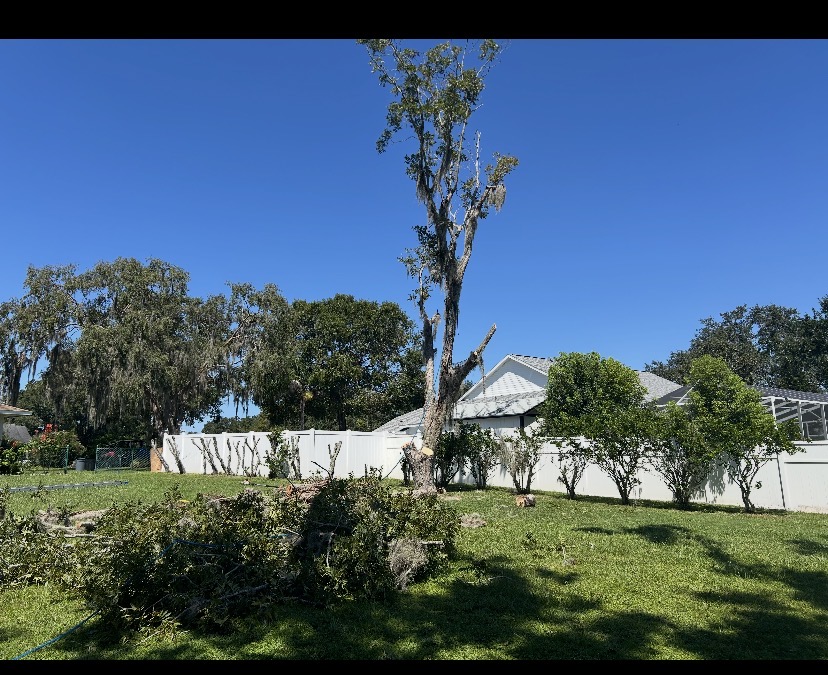
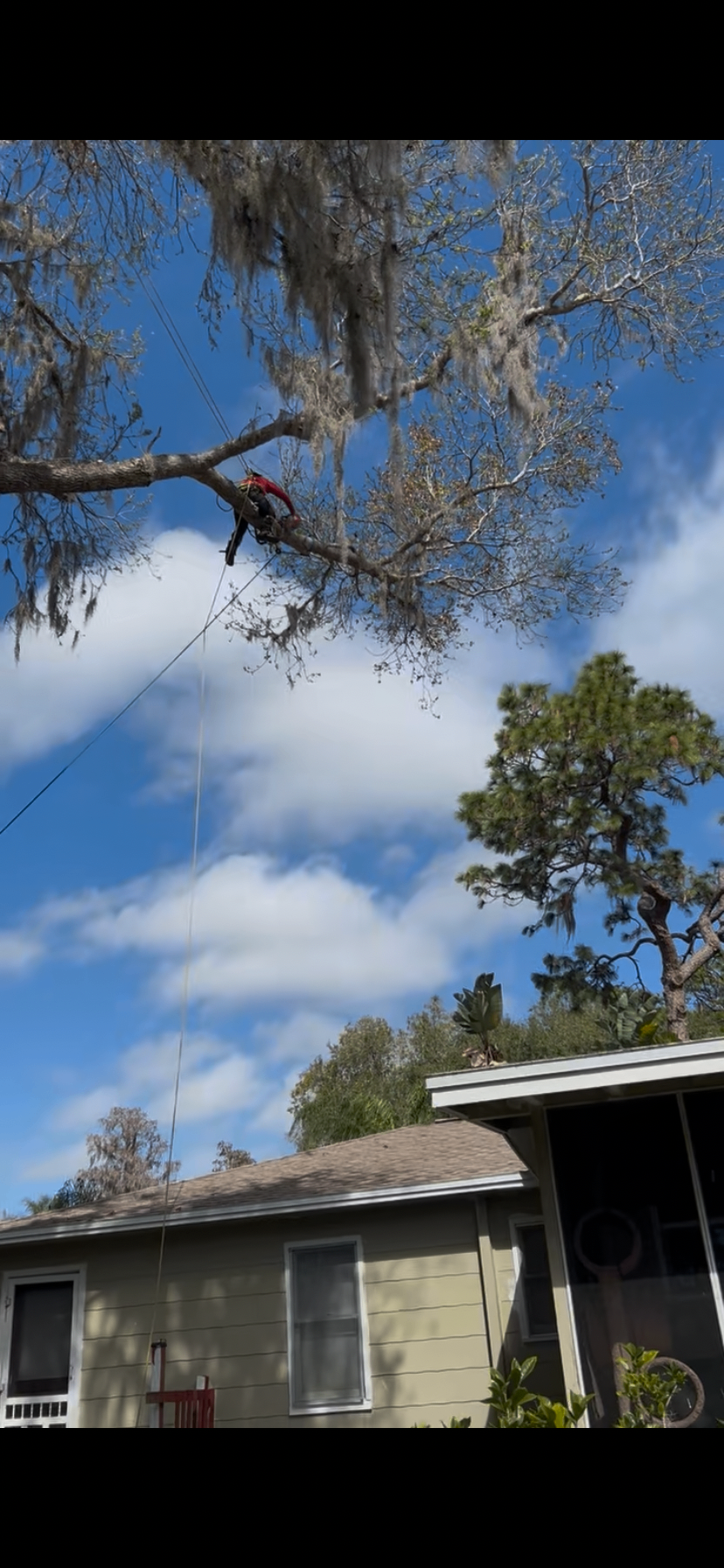
Safety Harbor residents notice when a big downtown oak comes down, and the city's tree ordinance reflects that: protected trees generally require a permit and sometimes replacement before removal, and routine pruning is judged against ANSI standards rather than left to guesswork. We approach nearly every Safety Harbor job as a pruning-first conversation — reducing end weight, cabling weak unions, removing deadwood — and only recommend outright removal when there is a documented structural defect or the tree is dead. That approach fits both the ordinance and what most Safety Harbor homeowners actually want for a tree they have lived under for years.
Storm response on a small, walkable city grid
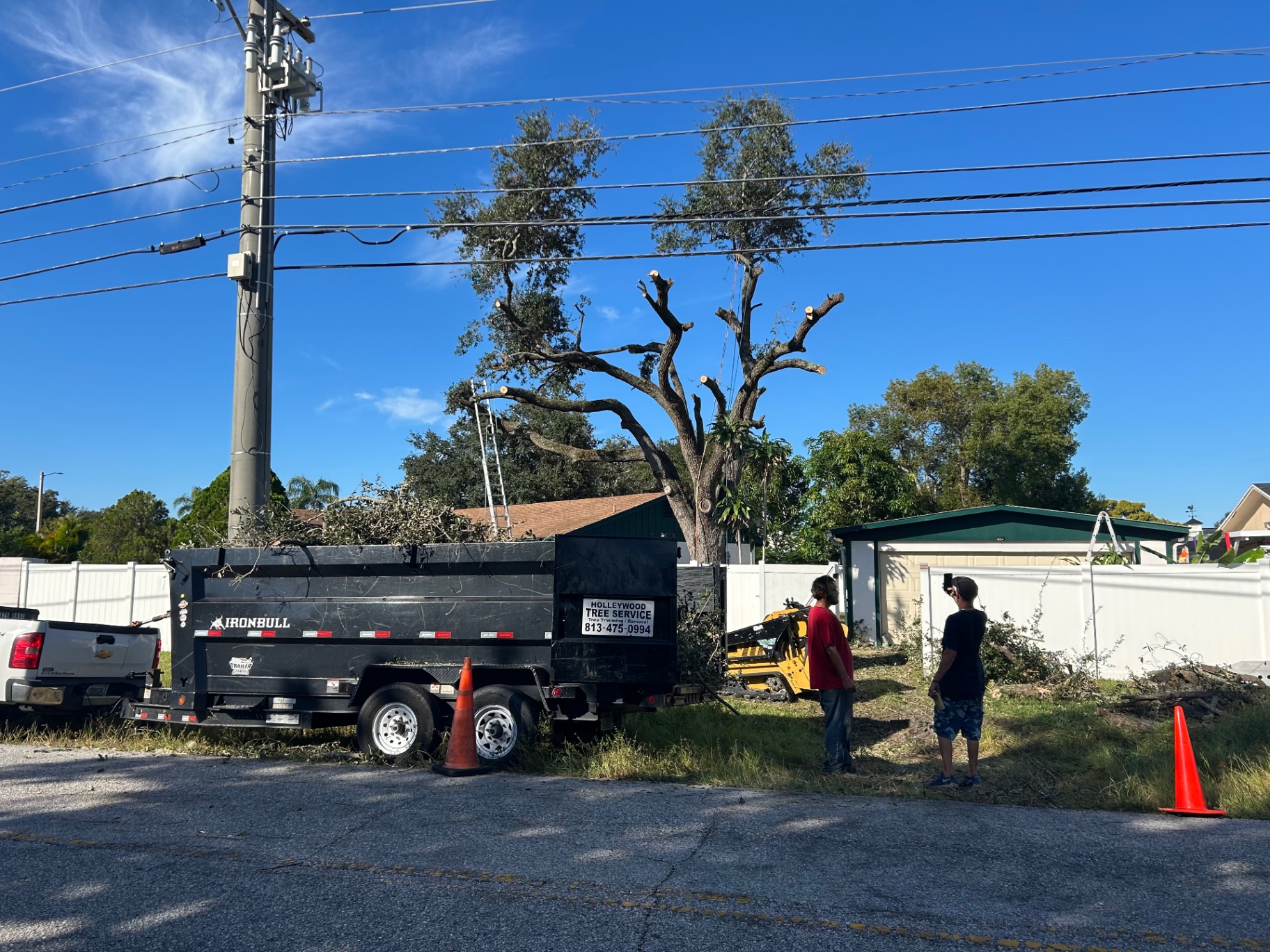
Safety Harbor's downtown grid is dense and walkable, with narrow streets and limited staging room compared to a suburban subdivision, which changes how a storm cleanup runs here. After wind events off Old Tampa Bay, we prioritize trees on structures and blocking Main Street or bayfront access first, then hangers left in the bluff-side canopy, then routine cleanup. Because the city is small, we can usually work it end to end in a single sweep rather than the multi-day rotation a larger city requires, and we document every stage for insurance and, where a protected tree is involved, for the city's records as well.