Local Knowledge
What Makes Lithia Trees Different
Lithia is river country. Properties strung along the Alafia River corridor, Bell Creek and out toward Lithia Springs run on acreage rather than lots, with river-bottom hardwoods, cypress and dense underbrush that has to be pushed back for pasture, home pads and long driveways. The phosphate-country soil here drains and holds water unevenly depending on how close you sit to the river, and hauling distance is a real part of every job since the nearest paved road can be a quarter mile or more from where the work happens. This is the most rural stretch we work regularly in Hillsborough County.
Trees We Work On Most in Lithia
- Live oak
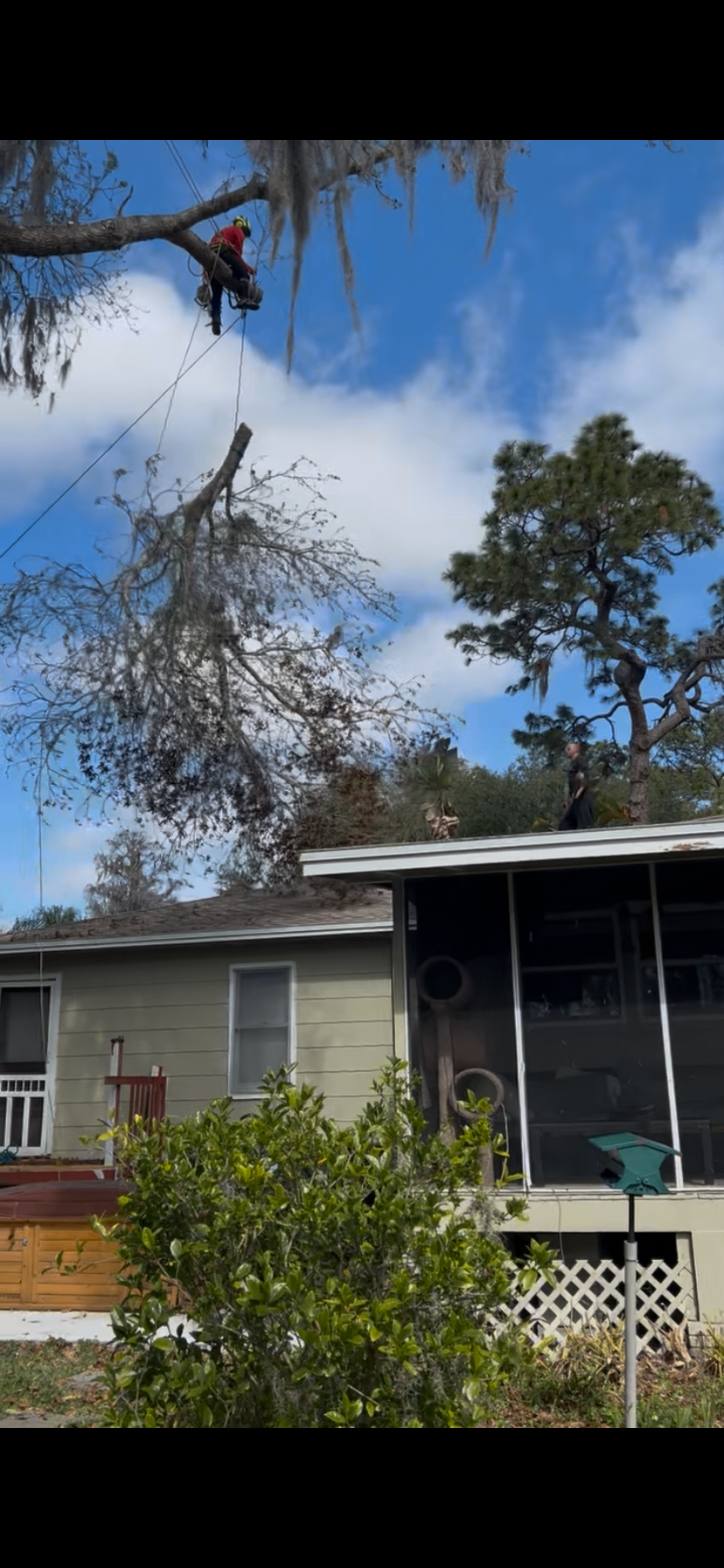
- Grows large and old along Lithia's river-bottom ground, often with a wide, low canopy shaped by decades of open space rather than a subdivision fence line. These get end-weight reduction and cabling where a union has developed included bark, since a Lithia live oak this size is worth generations of shade, not a quick removal.
- Bald cypress
- Native along the Alafia's floodplain and genuinely adapted to standing water, with buttressed bases and knees that anchor it in ground that would topple most hardwoods. We remove cypress only when trunk decay or storm damage compromises it, not simply because it sits in wet ground.
- Sweetgum
- Common in Lithia's low, moist river-bottom areas and fast-growing but weak-wooded. Sweetgum sheds limbs readily after wet years and is one of the first trees we deadwood on any property backing up to the river.
- Sand live oak and scrub oak
- Found on the drier, sandier rises between the river bottom and open pasture on Lithia acreage. Lower-growing and tougher than laurel or water oak, but still cleared where they crowd a fence line, pad site or driveway.
Phosphate-country soil that behaves differently near the river
The ground through Lithia sits over old phosphate deposits, and how it drains changes sharply depending on elevation relative to the Alafia. Down in the river bottom the soil holds water long after rain and roots stay shallow the way they do around any floodplain, while the sandier rises just a short distance away drain fast and hold roots poorly in a different way. We treat every Lithia property as two different growing environments rather than one, checking root plates near the water differently than we check the oaks out on drier pasture ground.
Underbrush, pad clearing and long hauls to the road
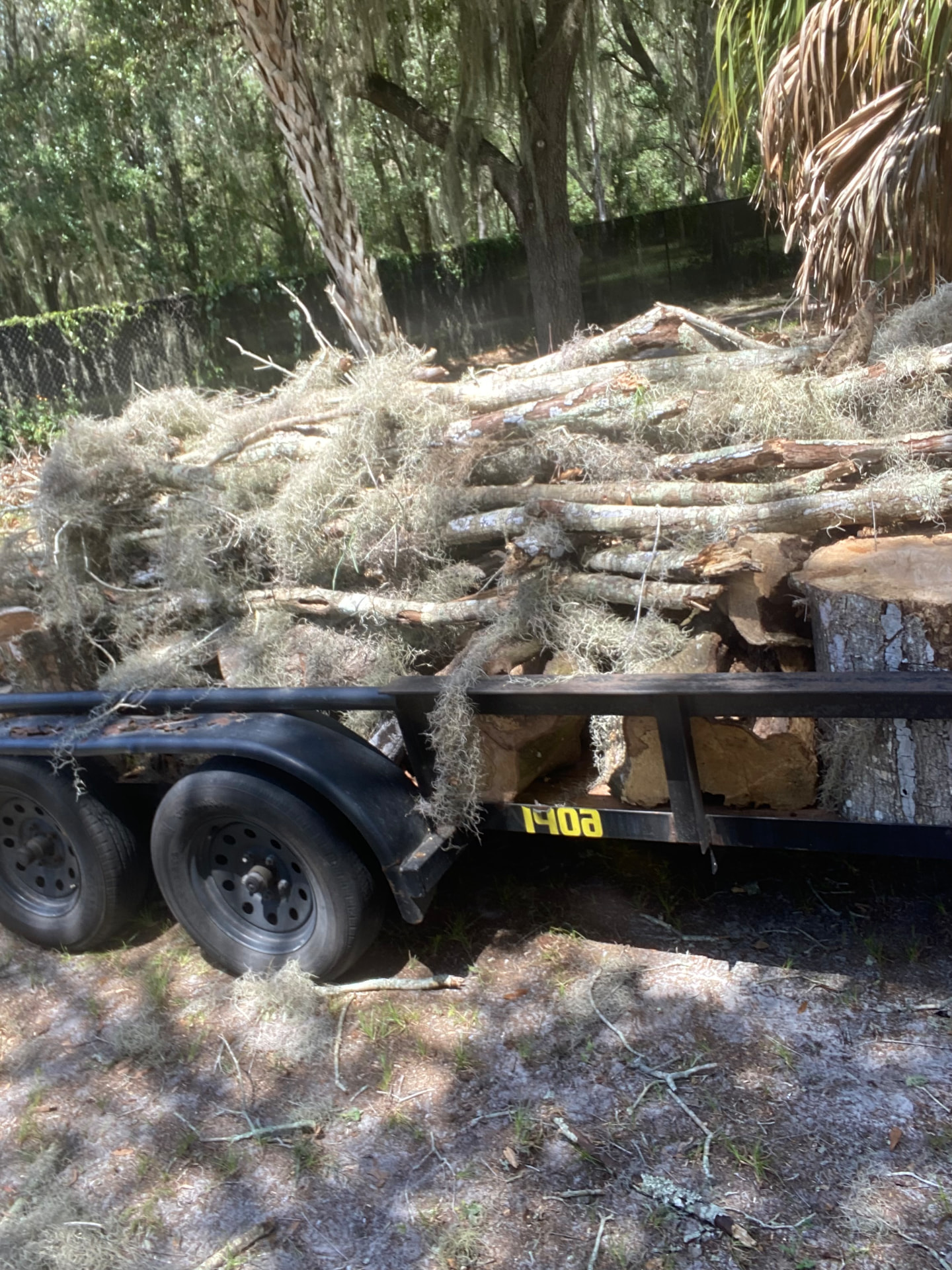
A typical Lithia job is not a single tree, it is a section of river-bottom underbrush, volunteer sweetgum and scrub oak that has grown up along a fence line or a planned home pad and needs to come out before pasture, driveway or building work can proceed. Because so much of Lithia's acreage sits well back from paved roads, hauling brush and logs out is often the longest part of the job, and we plan truck staging and haul routes as carefully as the cutting itself. Wet-season access along river-bottom ground can also close off certain sections entirely until the water table drops.
Storm season along the Alafia floodplain
Lithia gets the same summer lightning corridor as the rest of east Hillsborough, but its river-bottom trees behave differently in a storm than upland trees do — cypress generally holds, while sweetgum and shallow-rooted oaks near the water shed limbs or go over more readily after the ground has already been softened by rain. Storm response out here also takes longer simply because of distance and driveway length, so we prioritize any tree down across the only access road to a property first, since that blocks everything else that needs doing behind it.