Local Knowledge
What Makes Tampa Trees Different
Tampa is the job that never looks like the last one. A South Tampa crew might spend the morning easing a grand live oak off a Hyde Park bungalow's brick street and the afternoon dropping a lightning-killed pine behind a Seminole Heights bungalow with six feet of side yard. Davis Islands and Bayshore Beautiful carry some of the oldest, largest live oaks in the county, planted when the streets were laid out a century ago, and the City of Tampa treats many of them as protected. Between the grand canopy, the bay wind, and lots that were platted long before pickup trucks existed, Tampa proper is the most technically demanding city we work.
Trees We Work On Most in Tampa
- Live oak (grand oaks)
- South Tampa, Hyde Park and Davis Islands hold live oaks that predate the neighborhoods around them, many large enough to fall under the city's protected-tree threshold. We reduce end weight and cable co-dominant unions rather than topping, and we document trunk diameter and condition before any removal request goes to the city.
- Laurel oak
- Common street tree in Seminole Heights and Sulphur Springs, planted heavy in the early-to-mid 1900s and now well past the age where interior decay shows up. A full canopy on top does not rule out a hollow base — we check the root flare and listen for the sound of the wood before we sign off.
- Southern magnolia
- Planted widely in older South Tampa yards for the shade and the bloom. Shallow, wide root systems lift sidewalks and driveways over decades, and heavy horizontal limbs need periodic weight reduction to keep from splitting at the trunk.
- Sabal palm
- Tampa's official street palm along Bayshore Boulevard and much of Davis Islands. Boots harbor pests until shaved, and storm surge from Hillsborough Bay can saturate the root zone enough to topple even a healthy-looking palm. We trim to the horizontal, never a hurricane cut.
- Slash pine
- Scattered through New Tampa and Town 'n' Country over slab homes with little clearance. Pines snap rather than bend, and a lightning strike kills the tree standing long before the crown browns out. Anything dead over a roof in Tampa moves to the front of our list.
Bay wind, brick streets and Tampa's grand-oak liability
Bayshore Beautiful, Davis Islands and Hyde Park sit close enough to Hillsborough Bay and the Garrison Channel that wind off open water hits these canopies differently than inland Tampa. A grand oak that has stood for eighty years can still fail in a gust event if a co-dominant union has developed included bark, and because the city treats many of these oaks as protected, the decision to remove one is not ours alone to make. We inspect the union and root flare, document what we find in photographs, and where the tree can be saved we cable and reduce end weight instead of cutting it down. Where it genuinely is a hazard, we build the record the city's review process will want to see.
Brick streets, narrow lots and no room for a truck
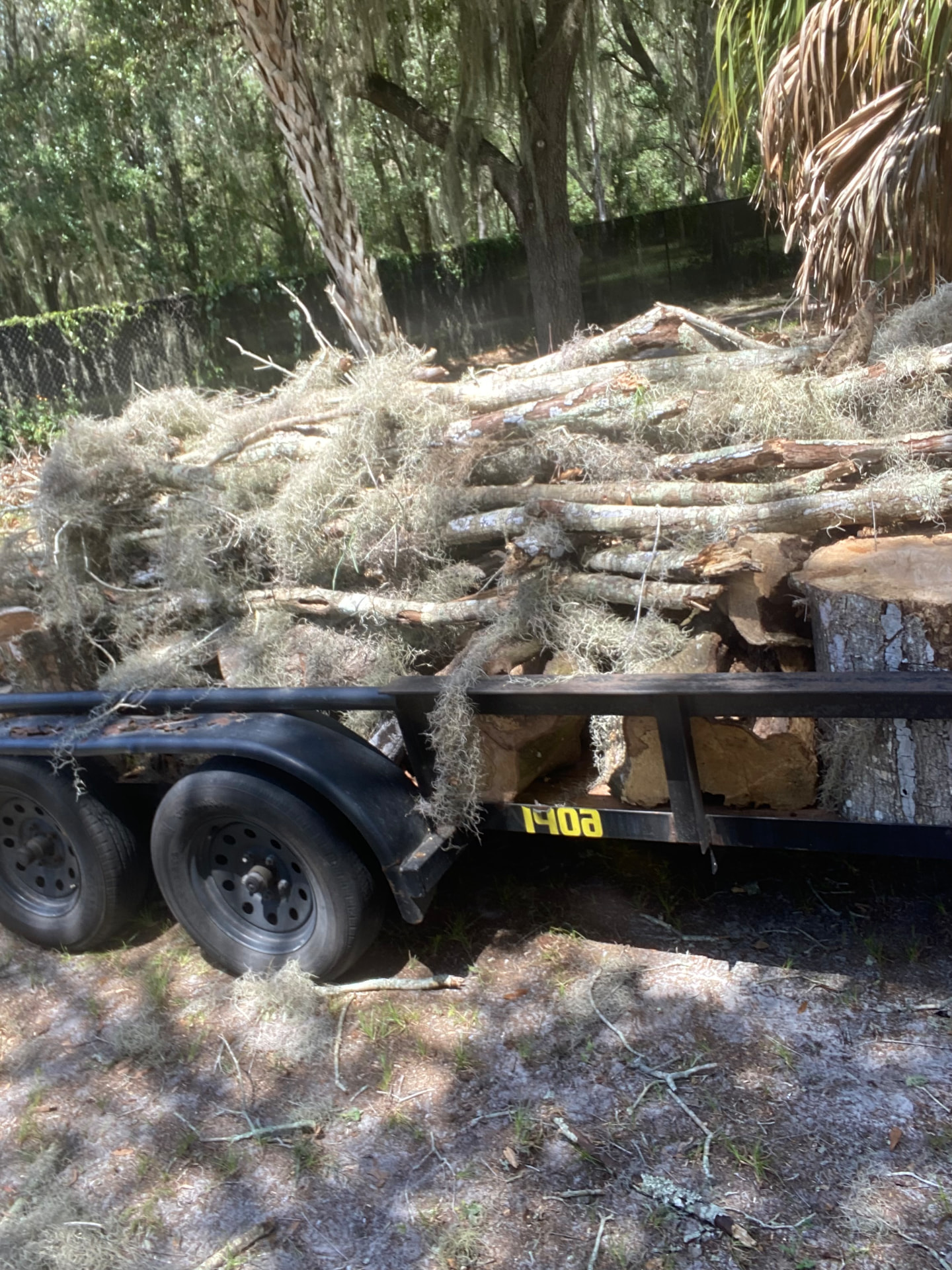
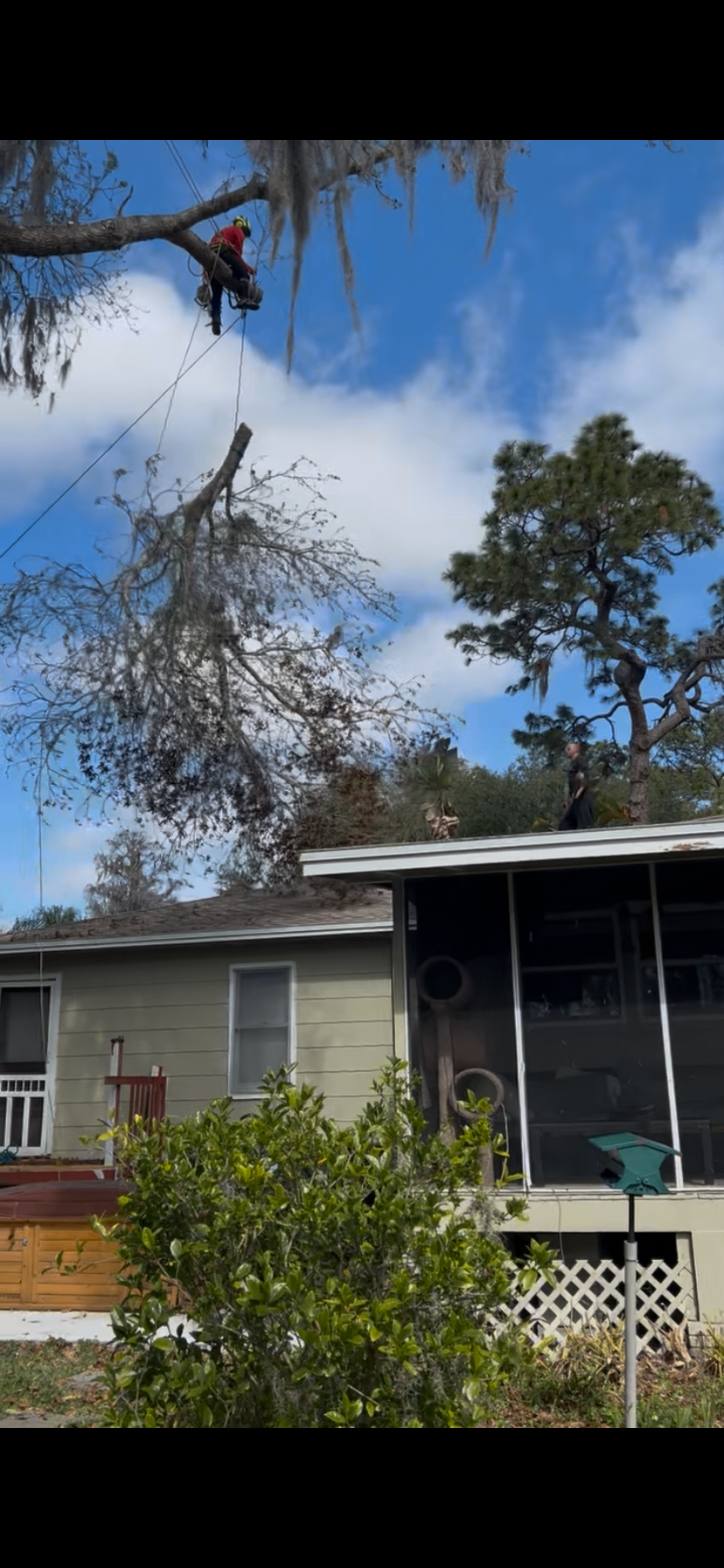
Much of Hyde Park, Seminole Heights and the older Palma Ceia blocks were platted for streetcars, not bucket trucks, and the brick paving underneath is not something we are willing to crack with an outrigger pad set wrong. A typical South Tampa job means rigging a tree down in controlled sections and carrying brush out by hand rather than driving equipment onto the property, or setting a crane in the street with a permit and picking the trunk straight up and over the roof. It is slower work than a suburban lot with a wide driveway, and it is the only way these old streets and the houses on them come through the job undamaged.
Storm surge, downtown wind funneling and Tampa's response pattern
Tampa's exposure is different depending on which side of the peninsula you are on. Davis Islands and Bayshore properties face storm surge risk that saturates root zones and topples otherwise sound palms and oaks, while New Tampa and Town 'n' Country see more straight-line wind damage from squall lines moving off the bay. During an active storm we run a citywide priority rotation — trees on structures and blocking exits first, hangers and standing hazards next, cleanup and hauling last — and we photograph every stage because Tampa adjusters see a lot of storm claims and clean documentation moves yours faster.